[ . BACK to WORLDKIGO TOP . ]
:::::::::::::::::::::::::::::::::::::::::::::::::::::::::::::::::::::::::::::::::::::::::::::::::::
Light, lights
***** Location: Japan
***** Season: Non-seasonal Topic
***** Category: Humanity / Heaven
*****************************
Explanation
The word LIGHT / LIGHTS just like that is not kigo.
The compound "festival lights" is not a kigo.
It neads a modifyer to tell us wheather it is inside a home our outside, a streetlight, headlight of a car, a neon light or something happening in the sky.
We also need to know which festival is indicated to determine the season of the kigo.
Let us look at some kigo related to this.
:::::::::::::::::::::::::::::::::::::::::::::::::::::::::::::::::::::::::::::::::::::::::::::::::::
in alphabetical order
(many Japanese words use the part AKARI )
. Autumn dusk, autumn twilight (aki no kure) Japan
Candle Night Japan
Cherry blossoms "in the light" 花明り(はなあかり)hana akari
Christmas with many light decorations, christmas tree decorations
Dawn in spring, Spring morning light (shungyoo, haru no akebono)
Daylight Savings Time (DST) worldwide
Divali (Diwali, India) Devali, Divalli ... a festival of lights in India
Fire, camp fire, firework display The God of Fire
First Sun, First Sunrise (hatsuhi, hatsuhi no de) Japan
"first light", hatsu akari
Lamplight in various seasons Japan.
Light offerings afloat (tooroo nagashi) mukaebi, okuribi
Lightning (inazuma) Japan
Moonlight, the moon
Polar Night Polar Circle, white night
No light ...
Power failure, power cut, electricity rationing, blackout ...
Shadow (kage)
Sliding doors : akari shooji 明り障子 light sliding doors
Spotlight, heavenly spotlight from sun or moon
... Spring light, spring shining (shunkoo) Japan
..... wind shining (kaze hikaru) Japan
Sunlight, sunrise, sunset
Twilight, dusk (kure, tasogare) Japan. Worldwide. a LIST
Winter lights 冬灯 fuyu akari
yuki akari 雪明(ゆきあかり)light from snow, snow light
*****************************
Things found on the way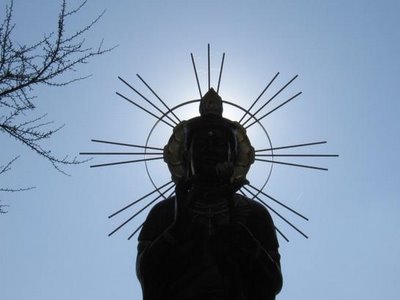
*****************************
HAIKU
so many lights
in the whole wide world -
peace for all
Gabi Greve, October 2009
*****************************
Related words
World Day for Peace and Light
October 10
source : Modite Otomi
kigo for autumn
World Day of Peace
kigo for winter
is a feast day of the Roman Catholic Church dedicated to peace which is held on January 1, on the Solemnity of Mary, Mother of God. It was introduced in 1967 and was inspired by the encyclicals Pacem in Terris and Populorum Progressio of John XXIII and Paul VI.
© More in the WIKIPEDIA !
***** World Days ..... a growing list
::::::::::::::::::::::::::::::::::::::::::::::::::::::::::::::::::::::::::::::::::::::::::::::::::
moonlight
on the temple roof -
and silence
Gabi Greve, Japan
October 2009
::::::::::::::::::::::::::::::::::::::::::::::::::::::::::::::::::::::::::::::::::::::::::::::::::
10/01/2009
Light, lights

9/25/2009
counting with fingers
[ . BACK to WORLDKIGO TOP . ]
:::::::::::::::::::::::::::::::::::::::::::::::::::::::::::::::::::::::::::::::::::::::::::::::::::
How to count on your fingers
in Japanese
fingers wiggling
in the autumn air -
Japanese haiku meeting
One of the endearing features of a haiku meeting (ku-kai 句会) in Japan is everybody sitting around counting on their fingers, usually of the left hand. After all 5 7 5 is still very much en vouge in Japanese Haiku, despite some free verse and other movements.
Anyway, today I do not want to engage in the discussion of counting like an abacus or not, rather on counting with your fingers as a culturally amazing event.
How do you count with your fingers?
One, two, three, for your THREE,
three fingers sticking out?
Right!
But Wrong in Japan!
Here is how the Japanese count with one hand,usually the left.
Palm facing your face, all fingers stretched out is the start.
ONE: Fold your thumb towards the palm of your hand.
TWO: Fold your pointer finger over the thumb.
THREE: Fold your middle finger over the thumb, joining the pointer.
So your three looks like three fingers folded, not sticking out !
Surprise!
FOUR: the ring finger (called "medicine finger" in Japanese), is folded.
FIVE: the little finger is folded, so NONE is sticking out.
Now still using the same hand with all fingers folded, here we go again:
SIX: the little finger is sticking out again.
(This is also a sign indicating a girlfriend of a married man. )
SEVEN: the ring finger is sticking out again.
Thus the middle line of a haiku is completed. :o)
For me, observing cultural differences is always quite fascinating.
So is the development of haiku in various culture spheres and languages.
Five - seven - five suits the Japanese Language, but does not come naturally in many other languages, as I have been musing about elsewhere.
5-7-5 ... go shichi go ... in Japanese
short-long-short ... in other languages
Enjoy your haiku, wiggeling your fingers.
Gabi
:::::::::::::::::::::::::::::::::::::::::::::::::::::::::::::::::::::::::::::::::::::::::::::::::::
snip
My point is that the idea that 5 and 7 syllable lines are unnatural in English
is something that has been assumed but, in my opinion, such counts are widely used in English both in ordinary speech and in poetic contexts.
I'll give just two examples that are widely known. Consider the child's poem:
Twinkle, twinkle, little star,
How I wonder what you are,
Up above the world so high,
Like a diamond in the sky.
Each line is seven syllables (I count "diamond" as two, hearing it as "dymond").
There are many children's rhymes that have this scheme.
Or consider this well-known and often sung poem:
Row, row, row your boat
Gently down the stream
Merrily, merrily, merrily, merrily
Life is but a dream.
Lines 1, 2, and 4 are five syllables.
Again, there are many rhymes, songs, and poems that feature a five-syllable count.
Or consider ordinary speech:
What grade did you get? -- 5
Did you hear the news? -- 5
I feel sorry for him/her. -- 5
I think you've misunderstood. -- 7
It's such a beautiful day. -- 7
dharmajim (Jim Wilson)
source : Happy Haiku Forum
and a bit more on counting by Jim Wilson
I look at counting syllables as similar to a potter's wheel.
A potter takes some raw clay and puts it on the wheel to shape the clay into a specific form; a cup, saucer, pot, etc. The potter is limited by the type of wheel, its speed, and the type of clay. I know a lot of potters and they don't find the potter's wheel, or the types of clay, limiting. Rather they simply accept the limitations and work within them.
Similarly, the formal poet takes raw language and places the language on the 'wheel' of counting, shaping the words into specific forms like the potter shaping clay. Just as the potter draws out specific forms from the clay, the formal poet draws out specific forms from the flow of ordinary language.
Another example would be composers composing songs. Once the composer settles on a time signature (3-4, 4-4, 6-8, etc.) the composer continues counting as the composer progresses; counting beats, counting measures.
More about Jim's thoughts "on counting"
source : Shaping Words
Exploring English Syllabic Verse
*****************************
Things found on the way
*****************************
Related words
5-7-5 ... go shichi go ... in Japanese
short-long-short ... in other languages
***** Haiku Theory Archives
::::::::::::::::::::::::::::::::::::::::::::::::::::::::::::::::::::::::::::::::::::::::::::::::::
8/23/2009
Rhyme and Rhythm
[ . BACK to WORLDKIGO TOP . ]
:::::::::::::::::::::::::::::::::::::::::::::::::::::::::::::::::::::::::::::::::::::::::::::::::::
Rhyme and Rhythm
Endrhyme is not usually common in Japanese haiku.
But there is a technique of using the same ON sound for the first sound of each of the three segments of a haiku.
This is called too-in とういん【頭韻】 alliteration, consonance.
青田にはあをき闇夜のありぬべし
aota ni wa
aoki yamiyo no
arinu beshi
Hirai Shoobin 平井照敏
The three segments start with the sound A.
I can not translate this properly, but the meaning of this haiku is
over the green fields
there should be
a green night sky
green fields -
growing over them should be
green night sky
:::::::::::::::::::::::::::::::::::::::::::::::::::::::::::::::::::::::::::::::::::::::::::::::::::::

あざみ あざやかな あさの あめあがり
azami
azayaka na
asa no
ame agari
The English does not convey the alliteration of the Japanese, just the meaning.
thistle
so bright
morning
rain ends
Taneda Santoka 山頭火
:::::::::::::::::::::::::::::::::::::::::::::::::::::::::::::::::::::::::::::::::::::::::::::::::::::
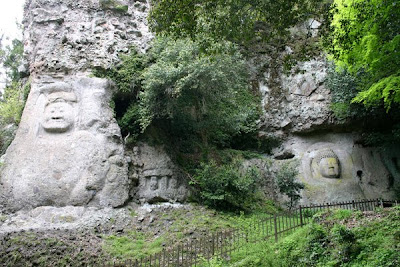
青蔦のがんじがらめに磨崖仏
aotsuta no ganji garame ni magaibutsu
the vine creeper
has completely wrapped it -
cliff Buddha
Shoobu Ayame 菖蒲あや
WKD : Magaibutsu 磨崖仏 Stone Carvings and Sculptures
The first sound of each segment is of the A-sounds. And most of the sounds are in the Japanese way softened, GA-sounds.
:::::::::::::::::::::::::::::::::::::::::::::::::::::::::::::::::::::::::::::::::::::::::::::::::::::
綿ちるや小藪小社小溝迄
wata chiru ya ko-yabu ko-yashiro ko-mizo made
cotton fluffs scatter -
to the little thicket, to the little shrine
to the little ditch
Kobayashi Issa
Tr. Gabi Greve
:::::::::::::::::::::::::::::::::::::::::::::::::::::::::::::::::::::::::::::::::::::::::::::::::::::
Alliteration Haiku
疑うなうしほの花も浦の春
utagau na
ushiro no hana mo
ura no haru
do not be in doubt -
even the flowers of the tides
have spring in the inlets
(My translation does not show this alliteration well.)

菊の花咲くや石屋の石の間
kiku no hana
saku ya ishiya no
ishi no ai
chrysanthemums blooming -
in a stonemason's yard
amid the stones
Tr. Barnhill
chrysanthemum flowers
are blossoming - amongst the stones
of a stonemason's
Tr. Greve
Matsuo Basho 松尾芭蕉
at Hatchobori canal 八丁堀, Edo.
This area of the town was known for its stonemasons, because the stones could be transported by ship on the canal. Even in these harsh surroundings, some chrysanthemums had made their way to flowering.
(This haiku has the cut marker YA in the middle of line 2.)
.............................................................................
Time turns towards trouble
The thieves torture the timid
Thrusting their thunder
source : jonathanxopher, 2007
寒かろう痒かろう人に逢いたかろう
samukaroo kayukaroo hito ni aitakaroo
you must be cold
you must be itching
you must long to see people
Masaoka Shiki, 1897
He wrote this for his good friend Kawahigashi Hekigoto, who was in hospital with smallpox. Shiki himself was also bound to his bed with tuberculosis at that time.
:::::::::::::::::::::::::::::::::::::::::::::::::::::::::::::::::::::::::::::::::::::::::::::::::::::
quote from
Global Haiku Tradition
the swallow swoops
barely rippling the canal’s surface
—perfect kill
Timothy Russell, shiki workshops 4941
This is on of Timothy Russell’s haiku that is completely from nature. The picture of the bird swooping in and getting its prey is something that can only been seen in nature. This reminds me of watching animals hunt for food on the Discovery Channel.
The first line, “the swallow swoops,” is a great opener. The alliteration of the ‘SW’s’ works really well in helping to visualize the bird fly down to catch its prey. In the second line the word “barely” emphasizes the preciseness of the swallow attack as it skims across the surface. This line creates a good image of the water. I can see the small ripples of the water. Finally, the last line sums it all up; “—perfect kill.”
source : Jared Stahl, 2003
:::::::::::::::::::::::::::::::::::::::::::::::::::::::::::::::::::::::::::::::::::::::::::::::::::::
© More in the WIKIPEDIA !
Yasuda
His translations apply a 5–7–5 syllable count in English, with the first and third lines end-rhymed. Yasuda's theory includes the concept of a "haiku moment" based in personal experience, and provides the motive for writing a haiku. His notion of the haiku moment has resonated with haiku writers in North America, even though the notion is not widely promoted in Japanese haiku.
Henderson
Henderson translated every hokku and haiku into a rhymed tercet (a-b-a), whereas the Japanese originals never used rhyme. Unlike Yasuda, however, he recognized that seventeen syllables in English are generally longer than the seventeen moras of a traditional Japanese haiku. Because the normal modes of English poetry depend on accentual meter rather than on syllabics, Henderson chose to emphasize the order of events and images in the originals. Nevertheless, many of Henderson's translations were in the five-seven-five pattern.
How rough the sea!
And, stretching off to Sado Isle,
The Galaxy . . .
On a journey, ill –
And my dreams on withered fields
are wandering still.
higoro nikuki karasu mo yuki no ashita kana
The usually hateful crows!
They also . . . on a morning
When it snows . . .
source : The Bamboo Broom
:::::::::::::::::::::::::::::::::::::::::::::::::::::::::::::::::::::::::::::::::::::::::::::::::::::
Alliteration can be a tribute to the music of language, and works that way as long as it does not distract from what the words say. I find that use of alliteration acceptable in haiku.
Rhyme is rarely found in haiku. When it is, it works best if unobtrusive - the reader does not even notice it on first reading. In my view the same is true for all modern poetry.
source : Karen Peterson Butterworth, NZ
:::::::::::::::::::::::::::::::::::::::::::::::::::::::::::::::::::::::::::::::::::::::::::::::::::::
More external LINKS on rhyming haiku
Can you rhyme Haiku poems? Yahoo knows the answer
http://answers.yahoo.com/question/index?qid=20080327184049AA8RkWL
by Alexey Andreyev
Classic haiku do not rhyme. However, rhymed haiku are possible.
http://www.thehaikupoet.com/alexey_def.htm
by Mark Smith
about Kerouac, The Dharma Bums
http://www.jackmagazine.com/issue7/essaysmsmith.html
by Charles Trumbull
http://www.askgar.com/haiku/9/iv.html
:::::::::::::::::::::::::::::::::::::::::::::::::::::::::::::::::::::::::::::::::::::::::::::::::::::

晴れぎはのはらりきらりと春時雨
haregiwa no
harari kirari to
haru shigure
almost fine now -
harari kirari falls
the spring sleet
Kawasaki Tenko (Kawasaki Tenkoo) 川崎展宏
with a lot of A-sounds and R-sounds in Japanese, that give it a delicate spring feeling. All three segments start with HA.
:::::::::::::::::::::::::::::::::::::::::::::::::::::::::::::::::::::::::::::::::::::::::::::::::::
松島やああ松島や松島や
Matsushima ya
aa Matsushima ya
Matsushima ya
A famous haiku by ?
Matsushima, famous area near Sendai, Northern Japan
::::::::::::::::::::::::::::::::::::::::::::::::::::::::::::::::::::::::::::::::::::::::::::::::::
Alliteration
In language, alliteration refers to the repetition of a particular sound in the first syllables of a series of words and/or phrases. Alliteration has historically developed largely through poetry, in which it more narrowly refers to the repetition of a consonant in any syllables that, according to the poem's meter, are stressed, as in James Thomson's verse "Come ..dragging the lazy languid Line along".
© More in the WIKIPEDIA !
Assonance
is the repetition of vowel sounds to create internal rhyming within phrases or sentences, and together with alliteration and consonance[1] serves as one of the building blocks of verse. For example, in the phrase
"Do you like blue?",
the /uː/ ("o"/"ou"/"ue" sound) is repeated within the sentence and is assonant.
© More in the WIKIPEDIA !
*****************************
Related words
NHK Haiku, August 2009
- quote -
Harold Stewart:
The use of rhyme in haiku is not that far wrong when one understands that in Japanese, due to the constructive use of the vowels in the language, one has a one-in-six chance that any two lines will rhyme. Thus, the Japanese haiku often have not only a line-end rhyme but often one or more internal rhymes. And the writers used this ability to strengthen their poems. Because rhyme occurs so easily it is easier to ignore because the syntax is not shaped to cause the rhyme as must be done in English. As in the example above, one can feel and see where Stewart made a change to get the rhyme.
It can happen that a person’s first version of writing down a haiku will naturally contain a rhyme. At this point the author can decide whether to keep it or to find synonyms to avoid the rhyme.
One thing to think about in making this decision is the feeling that when lines end with a matching rhyme, there is a feeling of the poem ‘closing down’ or seeming to be finished. We are so trained that rhymes occur at the end of a line that when the ear hears the rhyme, the mind automatically signals that the poem is ended. In haiku, we want exactly the opposite situation – the poem should open out, leaving something else to be thought. The reader should carry the words farther – to continue to think about it, ponder what has been said in order to arrive at the reader’s own understanding of the poem.
Also, when a series of haiku are rhymed, their very shortness will lead to a sing-song feeling of repetition that quickly becomes monotonous. Because English has been called a rhyme-poor language, our options for rhyme are greatly curtailed as we have less choices than other languages.
For these reasons, and to separate haiku from the styles of Western poetry, it has always been a basic rule that haiku are not rhymed.
Harold Stewart.
A Net of Fireflies. Tuttle: 1960. Page 88.
- source : ahapoetry.com -
:::::::::::::::::::::::::::::::::::::::::::::::::::::::::::::::::::::::::::::::::::::::::::::::::::::

. Jim Wilson .
ELH and Rhyme: Part 1
I’m going to take a few posts to discuss rhyme in ELH.
But as a prelude I want to touch on Basho’s use of rhyme in his “Narrow Road to the Deep North” (Oku no Hosomichi). I am aware that rhyming in Japanese is much easier than it is in English because of the structure of Japanese phonemes. It is therefore to be expected that there will be rhymes in Japanese haiku. Even so, I do not think the usage of rhyme by Basho is incidental or trivial and I suspect it has something to teach ELH, even though rhyme in English is more difficult and therefore has a more striking effect. By ‘rhyme’ in this context I am referring to end-rhyme, not interior rhyme or to assonance.
It is often said that haiku is a form of poetry that is ‘unrhymed’. But I don’t think that is quite accurate. Rhyme is used, as we shall see, by Basho in his haiku. What is fair to say is that rhyme is not a formal requirement of Japanese haiku. Unlike some forms of English or Chinese poetry where a rhyme scheme is a required formal element, the haiku form does not require that the poet incorporate rhyme into the poem. But that does not mean that Japanese haiku poets do not use or are unaware of its effects. Rhyme can be used (along with other sonic effects) for expressive purposes, as one tool to create an attractive haiku.
Looking at the haiku in Basho’s ‘Narrow Road’ I count 64 overall. Of these 13 use A-B-A. 4 of these are by Sora. 11 haiku use the A-A-B scheme. 4 use the A-B-B scheme. And 3 use A-A-A, one of those is by Sora. That is an overall count of 31 haiku using end-rhyme. That’s a little under 50% of the haiku. So the division between haiku that use end rhyme and those that do not is about 50-50.
I find the use of end-rhyme in the ‘Narrow Road’ to be effective and pleasing. This is illustrated in particular with the very last haiku:
hamaguri no / futami ni wakare / yuku aki zo
like a clam from its shell,
setting off for Futami Bay:
departing fall
(Barnhill, “Basho’s Journey”, page 77)
This is a particularly strong rhyme for it isn’t just the last syllables of lines 1 & 3 that rhyme (no / zo); the scheme encompasses guri no / aki zo, repeating the i – o pattern. I found only one other haiku that has an o / o end-rhyme for lines 1 & 3, so it is a rarely used sonic resonance in the work. And in that other haiku for line 3 it is the long ‘o’; so I suspect that would sound more like a slant rhyme in Japanese than a full on rhyme as in the closing haiku. (I’m not really sure of that; those who know Japanese, please feel free to correct me on this point.) In addition, there is no equivalent to the i – o pattern found in the concluding haiku. My feeling is that the end rhyme pattern in the concluding haiku is very strong.
Interestingly this rhyme pattern is replicated in the translation by Dorothy Britton:
Sadly, I part from you;
Like a clam torn from it shell,
I go, and autumn too.
(A Haiku Journey, page 85)
Notice how Britton replicates the two-part vowel pattern with ‘from you / tumn too’, which, I think, is quite an achievement in translation.
My feeling is that the effect of the A-B-A rhyme scheme is to frame the haiku and give it a definite sense of closure. For that reason it feels particularly appropriate for the closing lines of the ‘Narrow Road’. It feels like the last chord of a song. It is strongly cadential and very sonically satisfying.
Admittedly this is a brief overview of just one of Basho’s work. But I wanted to give this as background because I think the use of rhyme in ELH has Japanese precedent. Again, admitting that the sonic contours of the two languages differ, nevertheless the way Basho uses rhyme in the ‘Narrow Road’ does have some applicability, I feel, to ELH.
Now, on to some of the ways ELH poets use rhyme.
. Matsuo Basho Archives 松尾芭蕉! .
:::::::::::::::::::::::::::::::::::::::::::::::::::::::::::::::::::::::::::::::::::::::::::::::::::::
***** Haiku Theory Archives
::::::::::::::::::::::::::::::::::::::::::::::::::::::::::::::::::::::::::::::::::::::::::::::::::
8/18/2009
Stamp, stamps (kitte)
[ . BACK to WORLDKIGO TOP . ]
:::::::::::::::::::::::::::::::::::::::::::::::::::::::::::::::::::::::::::::::::::::::::::::::::::
Stamps (kitte)
***** Location: Japan
***** Season: Non-seasonal Topic
***** Category: Humanitz
*****************************
Explanation
This year (2009) in September, new stamps with haiku from the group of poets in Matsuyama are issued.
Gabi Greve
:::::::::::::::::::::::::::::::::::::::::::::::::::::::::::::::::::::::::::::::::::::::::::::::::::
近代俳句のふるさと 松山
kindai haiku no furusato Matsuyama
Matsuyama
the town where modern era haiku were born

正岡子規(まさおかしき) Masaoka Shiki
柿くへば 鐘が鳴るなり 法隆寺
kaki kueba kane ga naru nari Hooryuu-Ji
正岡子規 Masaoka Shiki
十年の 汗を道後の 温泉に洗へ
juunen no ase o Dogoo no yu ni arae
高浜虚子(たかはまきょし) Takahama Kyoshi
遠山に 日の当りたる 枯野哉
tooyama ni hi no ataritaru kareno kana
夏目漱石(なつめそうせき) Natsume Sooseki
sending to Shiki 送子規
御立ちやるか 御立ちやれ 新酒 菊の花
o-tachi yaru ka otachi yare shinshu kiku no hana
Shiki answered to this one
行く我にとどまる汝(なれ)に秋二つ
http://homepage2.nifty.com/mv_storia/nitiro-ryokou051125p.htm
河東碧梧桐(かわひがしへきごとう) Kawahigashi Hekigodoo
さくら活けた 花屑の中から 一枝ひろふ
sakura iketa hanakuzu no naka kara ishi hirou
. Matsuyama and Masaoka Shiki (松山と正岡子規)
kindai and gendai can both be translated as MODERN.
*****************************
Worldwide use
*****************************
Things found on the way


MORE
. Japanese Stamps with Haiku
Stamps from Oku no Hosomichi and more
. Matsuo Basho 松尾芭蕉 - Archives of the WKD .
*****************************
HAIKU
travel the world
with Buddha stamps -
letter writing in spring
Gabi Greve
. Stamps with Buddha Statues
::::::::::::::::::::::::::::::::::::::::::::::::::::::::::::::::::::::::::::::::::::::::::::::::::
初夏に開く郵便切手ほどの窓
shoka ni aku yuubin kitte hodo no mado
in early summer
I open a window the size
of a stamp
Arima Akito 有馬朗人
*****************************
Related words
Introducing Japanese Haiku Poets
. Stamps with Folk Toys 切手 .
. Stamps with Buddha Statues .
. Stamps with Japanese Food .
:::::::::::::::::::::::::::::::::::::::::::::::::::::::::::::::::::::::::::::::::::::::::::::::::::::
[ . BACK to WORLDKIGO . TOP . ]
[ . BACK to DARUMA MUSEUM TOP . ]
:::::::::::::::::::::::::::::::::::::::::::::::::::::::::::::::::::::::::::::::::::::::::::::::::::::
7/05/2009
Sarashinayama, Kamurikiyama
[ . BACK to WORLDKIGO TOP . ]
:::::::::::::::::::::::::::::::::::::::::::::::::::::::::::::::::::::::::::::::::::::::::::::::::::
Sarashinayama, Kamurikiyama
***** Location: Japan, Nagano
***** Season: Non-seasonal Topic
***** Category: Earth
*****************************
Explanation
Sarashinayama さらしなやま【更科山】 is the old name of a mountain in Nagano prefecture, now called Kamurikiyama 冠着山. It is 547 meters high.
Ubasuteyama (姨捨山) is the common name of Kamurikiyama (冠着山), a mountain in Chikuma, Nagano, Japan.

quote
Ubasute (姥捨, abandoning an old woman)
(also called "obasute" and sometimes "oyasute") refers to the custom allegedly performed in Japan in the distant past, whereby an infirm or elderly relative was carried to a mountain, or some other remote, desolate place, and left there to die, either by dehydration, starvation, or exposure. It "is the subject of legend, but [...] does not seem ever to have been a common custom".The practice was most common during times of drought and famine, and was sometimes mandated by feudal officials.
Ubasute has left its mark on Japanese folklore, where it forms the basis of many legends, poems, and koans. In one Buddhist allegory, a son carries his mother up a mountain on his back. During the journey, she stretches out her arms, catching the twigs and scattering them in their wake, so that her son will be able to find the way home.
A poem commemorates the story:
In the depths of the mountains,
Who was it for the aged mother snapped
One twig after another?
Heedless of herself
She did so
For the sake of her son
© More in the WIKIPEDIA !
Sarashinayama is associated with the moon of autumn.
:::::::::::::::::::::::::::::::::::::::::::::::::::::::::::::::::::::::::::::::::::::::::::::::::::
External LINK with photos
http://www.ne.jp/asahi/walking-in-the/mountains-in-japan/kamurikiyama.htm
*****************************
Worldwide use
*****************************
Things found on the way
The practice of "abandoning old women" is known as ubasute, the custom that is thoughtfully discussed and visually poignantly portrayed in a 1983 Japanese film,
The Ballad of Narayama (楢山節考 Narayama Bushiko),
by director Shohei Imamura.
Chen-ou Liu

.................................................................................
When the elderly started loosing their teeth, it was time for praparations to carry them to Obasuteyama.
I remember a scene from the movie, when grandmother, who was still very healthy and had all her teeth, felt she was a burden on her son and his bride.
So she knocked off her own teeth and asked the son to bring her to the mountain.
Gabi Greve
*****************************
HAIKU
一度見度さらしな山や帰る雁
ichido mitaki Sarashina yama ya kaeru kari
all eager to see
Mount Sarashina...
departing geese
我恋はさらしな山ぞかへる雁
waga koi wa sarashina yama zo kaeru kari
"My lover
is at Mount Sarashina!"
the goose flies north
Kobayashi Issa
3 haiku about Mount Sarashina / Tr. by David Lanoue
:::::::::::::::::::::::::::::::::::::::::::::::::::::::::::::::::::::::::::::::::::::::::::::::::::::
地吹雪やさきのさきまで姥捨野
jifubuki ya saki no saki made Ubasute-no
snowstorm blowing from the earth -
as far as the eye reaches
fields where old people are abandoned
Obara Takuyo 小原啄葉
Tr. Gabi Greve
:::::::::::::::::::::::::::::::::::::::::::::::::::::::::::::::::::::::::::::::::::::::::::::::::::::
Compiled by Larry Bole
. Happy Haiku Forum, June 2011 .
An excerpt from Matsuo Basho's haibun,
"An Account of the Moon at Mount Obasute in Sarshina"
(translated by David Landis Barnhill):
... The mountain runs southwesterly, about one league south of the village of Yawata. It is not particularly high, the rocks are not rugged, yet the whole mountain is permeated with the deep sadness of things. It is said that here "it is so difficult to be consoled."* and now I see why. I couldn't help grieving as I wondered how people could have abandoned elderly women, and the tears that fell compounded my melancholoy.
俤や 姨 ひとりなく月の友
於毛可けや 姥ひとりなく 月の友
omokage ya oba hitori naku tsuki no tomo
her face--
an old woman weeping alone
moon as companion
Barnhill's footnote:
*From an account of the legend in 'Tales of Yamato', the waka later included in the 'Kokinshuu':
waga kokoro
nagusamekanetsu
sarashina ya
obasuteyama ni
teru tsuki o mite
My heart
cannot be consoled,
here at Sarashina:
gazing upon the moon
on Mount Obasute
At another place, Barnhill has this comment about the haiku:
... The poem refers to a famous legend of a village with a custom of abandoning its old women. The custom was broken when one man returned to rescue his aunt the morning after he abandoned her on a moonlit night. The last line has been interpreted as the moon being the woman's companion, or the image of the woman being Basho's companion, as he views the moon.
'Omokage' means face, but also shadow, trace, image.
In 'Sarashina Journal' and the haibun
"The Moon on Mt. Obasute in Sarashina."
Chris Drake has this comment :
The hokku is from his short haibun Trip to Sarashina (更級紀行 Sarashina kikō). You can find a translation of the haibun in the Penguin collection by Nobuyuki Yuasa. Sarashina is the name of the village near Mt. Obasute, although the "original" Mt. Obasute is now believed to be one nearby the mountain believed to be Mt. Obasute in Basho's time. (There are different theories.) The haibun describes a trip Basho made specifically to see Mt. Obasute, since the September full moon above the mountain was one of the most famous sights in Japan. The hokku is perhaps the climax of the haibun as a whole, and it occurs near the end:
omokage ya oba hitori naku tsuki no tomo
her face!
an old woman weeping
moon her companion
The word omokage can mean both a visionary shape, visage, or appearance or an actual shape, features, face, or image depending on the context. In this case the context is supremely indefinite, so the hokku hovers on the edge of a moonlit scene that is both vision and reality. This hokku is one of many semi-shamanic poems and plays (including nō plays) in traditional Japanese literature, so Basho's readers wouldn't be surprised at his evocation of a vision.
Basho certainly does sees something, since he knows the nō play Obasute, in which the woman's spirit appears to a man from Kyoto who visits Mt. Obasute to view the harvest moon from the mountain's slope at a site near the abandoned woman's grave. The play doesn't include weeping, so Basho is probably referring to folk legends according to which the abandoned woman became a rock after her death -- a rock that weeps at night. Perhaps Basho is imagining that he is a kind of traveling monk figure in a nō play (called a waki or accompanying actor), that is, a haikai nō play taking place in real life. The moon is the only companion for the abandoned woman, and early in the nō play, before moonrise, she says the completely clear sky makes her very lonely, since even the clouds have abandoned her. At the same time, Basho also seems to be offering to be the woman's moon-viewing companion for a while as he transcends time and watches the same moon the woman watches in a timeless zone. Basho later told Kikaku he viewed the moon very late that night when there were few people around, so he no doubt did see a vision of himself alone together with the old woman's soul, and perhaps he prayed for her peace of mind and for her eventual entry into the Pure Land.
In the nō play the woman confesses that her soul is still attached to her former life and that she is unable to move on, so Basho may also be overlapping himself with Zeami, the author of the play, and regarding himself as Zeami's partner in their joint effort to help the woman's soul overcome her sorrow and her attachment and achieve liberation. Since there are no personal pronouns in the hokku, this overlapping wouldn't be unnatural. The woman's apparition/spirit, Basho, and Zeami may all be companions in viewing the full moon, a moon which is not only beautiful but which reflects Amida's shining compassion. Moonlight itself may suggest that Amida is also their companion, as the woman's spirit suggests in the play. Perhaps Basho wants to say that at one level we are all alone with the always moving moon in the transient, ever-changing world, and yet we should all be aware we are kindred companions and pray for each other.
Chris Drake
.................................................................................

田毎の月 姥捨山 長楽寺
tamai no tsuki
source : katurada kaizan
tamai no tsuki "moon on the rice paddies"
is a famous wording about the moon, together with the autumn moon at Katsurahama 桂浜 in Tosa (Kochi) and at Ishiyamadera 石山寺 .
This haiku by Basho was written at temple Choraku-Ji in Nagano.
長野県千曲市
There are many stone memorials in this temple, closely related to the obasute custom of the region.
tamai no tsuki
obasute tanada 姨捨棚田 Obasute rice paddies in Nagano
The 48 paddies at the temple are especially famous.
. . . CLICK here for Photos !
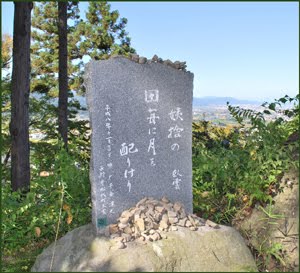
冠着山(姨捨山)
姨捨の田毎に月を配りけり
obasute no tamai ni tsuki o kubarikeri

source : naji
*****************************
Related words
***** WKD : Japanese place names and Haiku
Sarashina Kikoo 更科紀行 - 更級紀行 Sarashina Journal
. Matsuo Basho 松尾芭蕉 - Archives of the WKD .
[ . BACK to DARUMA MUSEUM TOP . ]
[ . BACK to WORLDKIGO . TOP . ]
:::::::::::::::::::::::::::::::::::::::::::::::::::::::::::::::::::::::::::::::::::::::::::::::::::::
5/15/2009
Crosscultural Musings
[ . BACK to WORLDKIGO TOP . ]
:::::::::::::::::::::::::::::::::::::::::::::::::::::::::::::::::::::::::::::::::::::::::::::::::::
Crosscultural Musings

Born in Germany, living in Japan since 1977, writing haiku in English, finding a lot of American influence in Japan ...
I am still puzzled ...
How does our social background and education affect the understanding of Haiku ? Even in ELH, we have poets from many countries, with different mother tongues to start from.
And reading translations of Japanese haiku, how many problems arise when reading it with a “Western mindset” or a “Japanese mindset” ?
I have tried to cultivate both over the last 30 year since living in Japan, but for me “Western” is mostly German (and I often find myself puzzled at the “American mindset”).
cross cultural, cross-cultural
I know, this might open a Pandorras box . .
cross-cultural haiku -
what would we all do
without google ?
:::::::::::::::::::::::::::::::::::::::::::::::::::::::::::::::::::::::::::::::::::::::::::::::::::
When translating, it is not only about words, but of a cultural understanding that might not (and usually does not) exist in the target language.
I will always remember the first missionaries looking at what we now call "Buddha Statues". They only saw hineous fiendish demonic fetishes (Götzenbilder in German) and translated the literature accordingly.
When I started writing about "Buddha Statues" in German, more than 30 years ago, I had to sort of make up my own vocabulary to convey what these things mean here in Japan in their original context and in the daily life of the Japanese.
Consider a statue of a Kannon with 1000 arms and a poor missionary 200 years ago trying to cope with such a monster in his Christian vocabulary ...
. Translating Haiku
Gabi Greve
:::::::::::::::::::::::::::::::::::::::::::::::::::::::::::::::::::::::::::::::::::::::::::::::::::
"There is big gap between Japanese mentality
and U.S. mentality in business.
You can get an interpreter in language,
but you cannot get an interpreter
in cultural difference."
Earnest Higa
The man who delivered pizza to Japan
source : Japan Times, September 2009
:::::::::::::::::::::::::::::::::::::::::::::::::::::::::::::::::::::::::::::::::::::::::::::::::::
quoting Carmen Sterba
“It is hard for Japanese to understand that westerners can be interested in Japanese culture or prefer to “practice” an eastern religion. We may see that as our right as citizens of a pluralistic society or a part of internationalization; whereas, the Japanese may see it as odd or incongruous.”
source : The Haiku Foundation Essence #1
:::::::::::::::::::::::::::::::::::::::::::::::::::::::::::::::::::::::::::::::::::::::::::::::::::
Wabi, Sabi, Empty
source : THF, Paul Watsky
:::::::::::::::::::::::::::::::::::::::::::::::::::::::::::::::::::::::::::::::::::::::::::::::::::
Prized Japanese social values that withstand 'Westernization'
By EDWARD HOFFMAN
http://search.japantimes.co.jp/cgi-bin/eo20100516a1.html
My Backup
:::::::::::::::::::::::::::::::::::::::::::::::::::::::::::::::::::::::::::::::::::::::::::::::::::
Here are some LINKS to my musings ...
Some of the oldest kigo in Japan are cross-cultural, originating in Chinese literature.
. Kigo in cross-cultural context
. Lake like a Mirror
. Spagetti with Chopsticks
. Suicide and your shoes
Toilet, Outhouse (benjo, no setchin, toire)
.................................................................................
Trying to understand a Japanese haiku in an American/European (add your country) environment, somehow, is like taking a fish out of its water.
You can see the dead fish, but not what gives real LIFE to the fish in its own environment.
. What am I missing ?
. . . . .
Since short is easy, anyone can write three lines of something, declare it HAIKU and here we are ... ! It suits the Western idea of individualism very well.
Sometimes I feel poets are parading their haiku dog, telling everyone
"This is my cat."
. Haiku in Japan and other regions
:::::::::::::::::::::::::::::::::::::::::::::::::::::::::::::::::::::::::::::::::::::::::::::::::::
eating soup
with chopsticks ...
crosscultural encounters
in a discussion about KIGO
quote
avoiding clichés is very important in modern English-language literature. George Orwell’s first rule for writers is:
“Never use a metaphor, simile, or other figure of speech which you are used to seeing in print.”
So much for autumn leaves!
Dave
. Discussion at THF, Winter 2010
Should we appreciate a penomenon of a different culture, which is new to us,
within its own terms, which we have to learn bit by bit,
by deprogramming our own cultural understanding and become open for the new world?
or
should we judge new and unfamiliar things within the terms of our own culture, to which we are used from childhood and tend to think are "right" ?
Do you see kigo only as a clichee that has been used to death and is best avoided?
Do you see kigo as a magic well where we all can drink from in our thirst for haiku poetry?
*****************************
Things found on the way
*****************************
Related words
***** . BACK
Haiku Theory Archives
::::::::::::::::::::::::::::::::::::::::::::::::::::::::::::::::::::::::::::::::::::::::::::::::::
5/13/2009
Shayo Shioe Shayoo - Hirose Izen
[ . BACK to WORLDKIGO TOP . ]
:::::::::::::::::::::::::::::::::::::::::::::::::::::::::::::::::::::::::::::::::::::::::::::::::::
Shayo (Shayoo) 潮江車要
車庸(しやよう)
The exact dates of his life are not known.
He was a pupil of Matsuo Basho. He met Basho in 1691, while Basho stayed at the temple Temple Gichuji 義仲寺 and Katada / Katata 堅田 on the shores of lake Biwa.
His real name was Shioe Chohei 潮江長兵衛,
he was from Osaka.
In the year 1694 (Genroku 7, on the 21st day of the ninth lunar month),
there was a haikai meeting in the home of Shayo, with Basho the guest of honor.
On this evening more haikai poets had come to discuss haiku with Matsuo Basho, and meybe even discuss the legacy of the Great Master. They also wrote a linked verse, see below.
Some of the names are known:
Enju Fuchiku (Fuuchiku) 槐諷竹(えんじゅ・ふうちく)(? - 1711)
Medicine merchant in Osaka. He cared for Basho when he fell ill in the tenth lunar month Osaka.
. Shadoo, Shadō 洒堂 Shado - Hamada Chinseki 浜田珍夕/珍碩 .
(~元文2年(1737)9月13日)
Hirose Izen 広瀬維然 (see below)
Kagami Shikoo 各務支考 (寛文5年 1665 ~享保16年(1731.2.7))from Mino, one of the 10 important disciples of Basho (jittetsu)
Yuutoo 膳所游刀 from Omi
. Hamada Shado in Numazu .
They kept talking and talking, ignoring the quietude of the autumn night, and had a good time. Or maybe they started quarreling about this and that whilst getting drunk? Who knows?
And the host, Shayo, could not go to bed before his honorable visitors.
Eventually, Basho himself and his host Shayo slept late the next morning.
During this haikai meeting,
Basho wrote the following autumn haiku in the home of Shayo:
秋の夜を打ち崩したる咄かな
aki no yo o uchikuzushitaru hanashi kana
this autumn night
brought to naught
by our storytelling
The autum night is treated like a thing, that can be broken down.
(for the use of the verb, see below)
Nowadays, people rarely sit outside and enjoy a long, cool autum night, chattering away and having a good time.
The long pleasant nights of autumn, spent in good company, have been "destroyed" by electricity, neon lights and television.
On the next morning after this party,
Matsuo Basho wrote the following haiku, lovingly commenting on his host and his habit of sleeping in after a meeting.
おもしろき秋の朝寝や亭主ぶり
omoshiroki aki no asane ya teishuburi
how funny of the host
to sleep late
on this autumn morning
Matsuo Basho 松尾芭蕉 died in 1694,
on the 12th day of the tenth lunar month, not long after he had written the haiku above.
. Basho Memorial Day (Basho-Ki 芭蕉忌)
quote
Basho and His Translators by John Carley
aki | no | yo | o || uchi | kuzushitaru || hanashi | kana
autumn night -
striking and making it crumble
this jovial chat
- Ueda 1992
the autumn night
brought to nothingness
by our chatter ---
- Carley 2010
Again, the impression is of a standard construction in which the fragment autumn night is set off by a cutting word against the image of the jovial chatter. Unlike the previous example there is a cutting word in the source text, but rather than being a device which seperates one metrical and semantic unit from another, it is actually the terminal intensifier kana which combines the functions of demonstrative adjective, ellipsis points, and wistful exclamation. No wonder Ueda settled on the em dash!
source : John Carley
. Matsuo Basho 松尾芭蕉 - Archives of the WKD .
::::::::::::::::::::::::::::::::::::::::::::::::::::::::::::::::::::::::::::::::::::::::::::::::::
Haiku by Shayo
起しせし人は逃けり蕎麥の花
(『續猿蓑』)
山茶花は元より開く帰り花
(『續猿蓑』)
うかうかと海月に交るなまこ哉
(『續猿蓑』)
::::::::::::::::::::::::::::::::::::::::::::::::::::::::::::::::::::::::::::::::::::::::::::::::::
Japanese Reference
潮江車要
:::::::::::::::::::::::::::::::::::::::::::::::::::::::::::::::::::::::::::::::::::::::::::::::::::::
What was Basho trying to imply when using this verb?
uchikuzushi 打ち崩し
uchikuzusu うちくずす【打(ち)崩す】
考え方・雰囲気などをこわす kangaekata, funiki o kowasu
says the YAHOO online dictionary.
you can "destroy" a situation, a way of thinking.
It is also used for an army to destroy the enemy or the happiness of someone etc.
kowasu こわす【壊す】to break, destroy, damage
for example, destroy a building
One Japanese comment says:
Basho was about to uchikuzushi, break down the old social ranking of waka, renga and haikai, trying to bring haikai to the same level.
江戸時代にあっては、和歌、連歌、俳諧の順が社会的通念であり、芭蕉はこれを打ち崩し、同等の立場に立つ俳諧観を形成、樹立することを生涯の目的とする。
芭蕉が「かるみ」「日常のごくありふれた事柄を平易に表現した俳諧」を考えたのはその意図に沿ったものだが、「おくのほそ道」「猿蓑」に具体化している。
1689年3月、「行春や、鳥啼き、魚の目は泪」を発句とし、曽良を同行者に、およそ2年8か月におよぶ「おくのほそ道」への旅に出る。
「夏草や、兵(つわもの)どもが、夢の跡」は平泉にて、その他、「象潟や、雨に西施の、ねぶの花」、「汐越や、鶴はぎ濡れて、海涼し」、「五月雨を、集めて早し、最上川」、「荒波や、佐渡に横たふ、天の川」など多数の句を残し、多くが現代にも膾炙している。
「おくのほそ道」の価値は卓抜な表現技術にある。一字も増補の余地がなく、一語も置き換えることができないほどに練り上げられた珠玉の名文である」と、作者は強調する。さらに、「このような文章は芭蕉以前にも、以後にもない」と。
しかも、「おくのほそ道」が出版され、世に出たのは芭蕉の死後である。
以下の三句は、芭蕉が没した同じ年の句。
「秋ちかき、心の寄るや、四畳半」
「此の道や、行く人なしに、秋の暮」
「秋深き、隣は何を、する人ぞ」
同年、大阪に旅し、その地で没した。
辞世の句は、「旅に病で、夢は枯野を、かけ廻る」。
source : ameblo.jp/hustler
.................................................................................

Fujita Honsoodoo 藤田本草堂
Edobanashi 江戸噺 Stories of Old Edo
The hankasen 半歌仙 linked verse written that night
at the home of Shayo
① 秋の夜を打ち崩したる話(咄)かな 翁 (Basho)
aki no yo o uchikuzushitaru hanashi kana
② 月待つほどは蒲団身に巻く 車庸 (Shayo)
③ 西の山二端三端雁鳴て 酒堂
④ 仕換ゆる牛の能動くなり 游刀
⑤ 舅の名をまんまと貰ふ真性者 諷竹
⑥ 小袖出して寝たる大年 惟然
⑦ 使やる所をはたとうち忘れ 支考
⑧ 代へても医者の見廻れにけり 翁 (Basho)
⑨ 拭立つ惣々の柱きらきらと 車庸 (Shayo)
⑩ 寄って揃ゆる弁当の椀 洒堂
⑪ 糺より黒谷かけて暮かゝり 游刀
⑫ 薄がなくは野は見られまい 支孝
⑬ 鹿の来ぬ夜は宿賃が百の損 惟然
⑭ 雨気の月の細き川筋 車庸 (Shayo)
⑮ 火燈して薬師を下る誰が嚊 翁 (Basho)
⑯ 七種まではよろづ隙なき 游刀
⑰ 見せ馬の荷鞍の茜花やかに 車庸 (Shayo)
⑱ 小館ならぶ金杉の春 惟然
source : natsu uguisu
:::::::::::::::::::::::::::::::::::::::::::::::::::::::::::::::::::::::::::::::::::::::::::::::::::
Here is another linked verse report
from Summer 1962, as reported by Shayo.
with poems from Basho and Kikaku.
己が火を木々の蛍や花の宿
己が火を木々に蛍や花の宿
ono ga hi o kigi ni hotaru ya hana no yado
Basho 芭蕉
蛍見や鯉も胴うつ五間の間
hotarumi ya koi mo doo utsu gokan no ma
Shayo 車庸
『己が光』(車庸編)
http://members.jcom.home.ne.jp/michiko328/onogahikari.html
*****************************
Related words
Hirose Izen 広瀬維然
(~正徳1年(1711)2月9日)
His real name was Gen no Joo 源之丞(げんのじょう).
His haiku names were Motoushi 素牛
fuuradoo 風羅(ふうら)堂 Furado
鳥落人 and others.
He lived in Mino.
..........................................................................
Matsuo Basho wrote this hokku for him :
藤の実は俳諧にせん花の跡
fuji no mi wa haikai ni sen hana no ato
fuji seed pods
as theme for our haikai -
after the flowers
For Hirose Izen 広瀬維然.
1689 Oku no Hosomichi, at Ogaki, 元禄2年9月, ninth lunar month
The town of Seki 関 in Gifu was quite famous for its wisteria flowers, but when Basho arrived at Ogaki, it was autumn. So he composed this poem for his host, Hirose Izen 広瀬維然 from Seki.
(Maybe Izen was insecure about the various possibilities of haikai and this was an instruction for him.)
For Basho, anything at hand was worth a subject for a greeting poem and a haikai session.
This shows his true haikai spirit.
The priest Soogi 宗祇 Sogi (1421 - 1502) is famous for his waka about wisteria blossoms.
- - - Station 43 - Ogaki 大垣 - - -
. Matsuo Basho 松尾芭蕉 - Archives of the WKD .
. Basho, Hokku and Haikai - Theory - .
..........................................................................
うめのはな赤いは赤いはあかいはな
Japanese plum flowers
red, red
red, indeed
水鳥やむかふの岸へつういつうい
A water bird
sliding to the other bank
straight, swift and quiet
source : akitahaiku.wordpress.com
Ume no hana akai wa akai wa akai wa na
Plum blossoms, they are
Very red, indeed, very red,
Very red they are.
Wakaruru ya kaki kuinagara saka no ue
I say my goodbye,
Eating persimmons, standing
At the top of a slope.
Laughter in Japanese Haiku
source : Tr. Nobuyuki Yuasa
.................................................................................
花さけや惟然が鼾止るやら
hana sake ya Izen ga ibiki tomaru yara
bloom, cherry trees!
Izen's snoring
may stop
Kobayashi Issa
Tr. David Lanoue
:::::::::::::::::::::::::::::::::::::::::::::::::::::::::::::::::::::::::::::::::::::::::::::::::::::
Comment by Chris Drake
bloom, blossoms!
priest Izen's snoring
seems to have stopped
hana sake ya izen ga ibiki tomaru yara
Hirose Izen (d. 1711)
is famous as Basho's most "eccentric" follower. He was born as the third son of a rich sake brewery owner, but he lost his inheritance, and when he saw a plum blossom petal fall from the force of the breeze created by a passing bird, he decided to become a Buddhist priest and devote his life to haikai. In the middle of the night he left his sleeping wife and children and became a mendicant priest, traveling around Japan for the rest of his life. He became a follower of Basho and often helped him as an assistant toward the end of Basho's life, and after Basho's death his strong, direct style became even more individualistic and full of fuukyou (風狂), or conscious madness amid holy poverty, one of Basho's ideals taken from Ikkyu and other Zen writers when he was younger. This hokku by Izen is a famous example:
plum blossoms --
how red, how red
how incredibly red
ume no hana akai wa akai wa akai wa na
Especially after Basho's death, Izen often used strong, colloquial expressions, onomatopoeia, and emotional rhythms, causing some of Basho's leading disciples to claim he was besmirching the sacred reputation of Master Basho, yet because Basho had always publicly respected him, Izen was able to ignore these criticisms, which was lucky, since some of his hokku are among the best written by Basho's followers. For instance, this 1694 hokku from Zoku-Sarumino about saying farewell to Basho:
separating --
at the top of the slope
I eat a persimmon
wakaruru ya kaki kuinagara saka no ue
In a headnote Izen writes that he said farewell to Basho at the bottom of the slope, so some time has passed, and at the top of the slope he stops and gazes at Basho's back side growing smaller in the distance. Probably unconsciously, his strong emotion translates itself into a desire to eat something, perhaps to make up for the emptiness he now feels, and he finds himself eating a persimmon he was holding or carrying. The taste of Basho disappearing and the taste of the sweet persimmon disappearing yet lingering in his mouth are uncannily similar, and both are closely connected at a deep place in Izen's mind and no doubt in the minds of most readers. The fact that Izen uses a colloquial, inelegant word (kui-) for "eat" makes the total effect even more direct and moving.
Izen continued to write freely to the end of his life, often addressing and sympathizing with plants, trees, and animals and expressing common, often subjective emotions. Issa was strongly drawn to Izen's free spirit and wandering lifestyle, and he learned much from him about using non-literary, ordinary language and onomatopoeia and using hokku to explore his daily life. In Issa's hokku above, Izen may be a kind of double for Issa himself. Like Izen, Issa addresses the trees and asks them strongly to hurry up and begin to bloom before Izen wakes up. And Izen seems to have stopped snoring, so he may be waking up already. Like Izen, Issa himself must have often made himself at home and slept beneath plum and cherry trees when he was traveling or just going blossom-viewing, and he understands how deeply Izen would be moved if he woke up and saw fellow-traveler blossoms blooming above him. Since Izen has died nearly a century earlier, Issa may be suggesting to the trees that Izen's spirit is snoring away inside him and will now come alive and wake again through Issa.
Izen, as Issa knew, wrote many more hokku about plum blossoms than about cherry blossoms, so the unspecified blossoms in Issa's hokku might be plum blossoms. The hokku is from the second month, so if this is a hokku of direct observation, the trees are more likely to be cherry trees, but they could be late-blooming plums. Issa may mean the blossoms to be either or both plum and cherry, depending on the reader -- or perhaps cherries from a literal perspective and plums from Izen's perspective. Usually unspecified blossoms in renga and haikai refer to cherry blossoms, but because of Izen's presence here, Issa's hokku, like many of Izen's hokku, may be deviating from the norm. Issa's hokku verges on literary shamanism.
Chris Drake
:::::::::::::::::::::::::::::::::::::::::::::::::::::::::::::::::::::::::::::::::::::::::::::::::::::
. Matsuo Basho 松尾芭蕉 - Archives of the WKD .
***** Introducing Japanese Haiku Poets
::::::::::::::::::::::::::::::::::::::::::::::::::::::::::::::::::::::::::::::::::::::::::::::::::
4/23/2009
Tosa Nikki - Tsurayuki
[ . BACK to WORLDKIGO TOP . ]
:::::::::::::::::::::::::::::::::::::::::::::::::::::::::::::::::::::::::::::::::::::::::::::::::::
Tosa Diary (Tosa Nikki)
***** Location: Japan
***** Season: Non-seasonal Topic
***** Category: Humanity
*****************************
Explanation
Tosa Nikki 土佐日記 Tosa Diary
by
Ki no Tsurayuki 紀貫之
(872-945)
Nikki bungaku (日記文学) is a genre of Japanese diary literature including prominent works such as the Tosa Nikki, Kagerō Nikki, and Murasaki Shikibu Nikki. While diaries began as records imitating daily logs kept by Chinese government officials, private and literary diaries emerged and flourished during the Heian period (794-1192 AD).
Although scholars have found diaries dating back to the eighth century, most of those were mere records kept on daily matters of state. At that time, Japan looked to China as a model of culture and civilization and sought to copy Chinese official government diaries. Thus, early Japanese diaries were factual, written in Chinese characters, and influenced by official, male perspectives.
Ki no Tsurayuki (872?-945), a famed poet and author, is credited with writing the first literary diary.
His Tosa Nikki, written in 935, records his journey from Tosa in Shikoku to Kyoto through the alleged perspective of a female companion. Departing from the tradition of diaries written in Chinese, Tsurayuki used vernacular Japanese characters, waka poetry, and a female narrator to convey the emotional aspects of the journey.
© More in the WIKIPEDIA !
:::::::::::::::::::::::::::::::::::::::::::::::::::::::::::::::::::::::::::::::::::::::::::::::::::
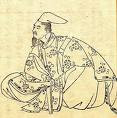
Ki no Tsurayuki
was a Japanese author, poet and courtier of the Heian period.
Tsurayuki was a son of Ki no Mochiyuki. He became a waka poet in the 890s. In 905, under the order of Emperor Daigo, he was one of four poets selected to compile the Kokin Wakashū, an anthology of poetry.
After holding a few offices in Kyoto, he was appointed the provincial governor of Tosa province and stayed there from 930 until 935. Later he was presumably appointed the provincial governor of Suo province, since it was recorded that he held a waka party (Utaai) at his home in Suo.
He is well-known for his waka and is counted as one of the Thirty-six Poetry Immortals selected by Fujiwara no Kinto. He was also known as one of the editors of the Kokin Wakashū. Tsurayuki wrote one of two prefaces to Kokin Wakashū; the other is in Chinese. His preface was the first critical essay on waka. He wrote of its history from its mythological origin to his contemporary waka, which he grouped into genres, referred to some major poets and gave a bit of harsh criticism to his predecessors like Ariwara no Narihira.
His waka is included in one of the important Japanese poetry anthologies, the Hyakunin Isshu, which was compiled in the 13th century by Fujiwara no Teika, long after Tsurayuki's death.
Besides the Kokin Wakashū and its preface, Tsurayuki's major literary work was the Tosa nikki (土佐日記) (Tosa Diary), which was written using kana.
The text details a trip in 935 returning to Kyoto from Tosa province, where Tsurayuki had been the provincial governor.
Most researchers have long believed that Tsurayuki impersonated a woman, because they assume that kana was usually by women in the Heian Period.
© More in the WIKIPEDIA !
Out in the marsh reeds
A bird cries out in sorrow,
As though it had recalled
Something better forgotten.
A lovely flower withered,
with its colors gone,
the fragrance
lingers faintly
at the temple bell.
preface to the Kokinshu 古今集 (ca. 905)
*****************************
Worldwide use
Die alte Provinz Tosa
Tosa ist der alte Name der heutigen Präfektur Koochi. Tosa war in früheren Zeiten über die steilen Berge von Zentral-Shikoku kaum zu erreichen und der einfachste Zugang war mit dem Schiff. In dem bekannten „Tagebuch von Tosa“ beschreibt Ki no Tsurayuki (872-945) den fünfjährigen Aufenthalt des Statthalters von Tosa in diesem Hinterland und seine Reise zur Hauptstadt Kyoto, allerdings aus der Sicht einer Hofdame gesehen. Dieses Tagebuch ist eines der ersten seiner Art in der japanischen Tagebuch-Literaturgeschichte.
Dank seiner Abgelegenheit war Tosa auch die Endstation einiger Adeliger, die ins Exil geschickt wurden und so ihre höfische Kultur mit in diese Gegend brachten.
Gabi Greve
*****************************
Things found on the way
Sweets from Tosa

銘菓「土佐日記」饅頭 Manju

WASHOKU : Dishes from Kochi (Koochi 高知)
*****************************
HAIKU

土佐日記懐にあり散る桜
Tosa Nikki futokoro ni ari chiru sakura
in my breast pocket
I carry the "Tosa Diary" -
cherry blossoms fall
Takahama Kyoshi 虚子
:::::::::::::::::::::::::::::::::::::::::::::::::::::::::::::::::::::::::::::::::::::::::::::::::::
. nikki kau 日記買う (にっきかう) buying a diary
furu nikki 古日記 (ふるにっき) old diary
nikki hatsu 日記果つ(にっきはつ)end of the diary
kigo for mid-winter
.................................................................................
hatsu nikki 初日記(はつにっき)first entry in the diary
..... nikki hajime 日記初 にっきはじめ
..... shin nikki 新日記(しんにっき)new diary
kigo for the New Year
.............................................................................
この暗き海鳴の町日記買ふ
kono kuraki uminari no machi nikki kau
this dark town
where the sea roars so loud -
I buy a diary
Kuroda Momoko 黒田杏子
:::::::::::::::::::::::::::::::::::::::::::::::::::::::::::::::::::::::::::::::::::::::::::::::::::::::
Tsurayuki and the Plum Blossoms

source : mifyu1018 - clay bells and poetry
人はいざ心も知らず ふるさとは
花ぞむかしの 香ににほいける
hito wa iza kokoro mo shirazu furusato wa
hana zo mukashi no ka ni nioi keru
The depths of the hearts
Of humankind cannot be known.
But in my birthplace
The plum blossoms smell the same
As in the years gone by.
Ki no Tsurayuki

painting by 稲垣晴雪
Ooshukubai 鴬宿梅
Lit. the plum tree where the warbler dwells.
A painting subject inspired by an episode in the 10c tale in OOKAGAMI 大鏡 concerning a daughter of Ki no Tsurayuki 紀貫之 (898?-945?) who refuses to part with a plum tree (ume 梅). Emperor Murakami 村上 (r. 946-967) decided to replace the withered plum tree in front of his palace, Seiryouden 清涼殿, with a magnificent beautiful red plum tree from Tsurayuki's daughter's garden.
When a messenger arrived to take the tree, however, the daughter attached a waka 和歌 to the branch of the plum tree. It reads;
"The emperor's command should be highly revered,
but how shall I answer if the warbler (uguisu 鴬) asks
where its home (yado 宿) is?"
The Emperor was so moved that he decided to return the tree.
source : JAANUS

The village of my youth is gone,
New faces meet my gaze;
But still the blossoms at thy gate,
Whose perfume scents the ways.
Recall my childhood days.
Tr. Porter
... It is related that Tsurayuki once visited a friend after a long absence; and on being asked jestingly by the latter, how he could remember the way after such a long interval of time, the poet broke off a spray of blossoms from a plum tree growing at the entrance and presented it to his friend with the above impromptu verse.
source : books.google.co.jp

source : www.sacred-texts.com
.............................................................................

source : bokunohosomichi
あこくその心も知らず梅の花
Akokuso no kokoro mo shirazu ume no hana
even the heart of Akokuso
I do not know:
plum blossoms
Tr. Barnhill
like Akokuso's heart
I can't ever know
plum blossoms
Tr. Reichhold
l’esprit intime d’Akokuso
je ne connais pas -
mais ces fleurs de prunier !
Tr. Daniel Py
Akokuso 阿古久曾 - The name of Ki no Tsurayuki 紀貫之 when he was younger.
Written on the New Year day of 1688 貞亨5年正月,
making a reference to the famous waka by Tsurayuki.
Basho stayed at the home of
Ogawa Fuubaku 小川風麦 Ogawa Fubaku in Iga Ueno.
- kokoro こころ - 心 "heart", mind, soul -
. Matsuo Basho 松尾芭蕉 - Archives of the WKD .
.............................................................................

貫之の梅よ附たり三ケの月
Tsurayuki no ume yo tsuketari mike no tsuki
Oh these plum blossoms
of Tsurayuki - hanging on to
a three-day moon
Kobayashi Issa
(The haiku has the cut marker YO in the middle of line 2.)
Tsurayuki's plum blossoms!
attached
to a sickle moon
Tr. David Lanoue
There is even a plum wine with this name:

Oshukubai 鴬宿梅
*****************************
Related words
***** Food from Tosa
***** Museum Haiku about famous Paintings
:::::::::::::::::::::::::::::::::::::::::::::::::::::::::::::::::::::::::::::::::::::::::::::::::::::
[ . BACK to DARUMA MUSEUM TOP . ]
[ . BACK to WORLDKIGO . TOP . ]
:::::::::::::::::::::::::::::::::::::::::::::::::::::::::::::::::::::::::::::::::::::::::::::::::::::


 Posts
Posts


