[ . BACK to WORLDKIGO TOP . ]
:::::::::::::::::::::::::::::::::::::::::::::::::::::::::::::::::::::::::::::::::::::::::::::::::::
Arisoumi coast, Ariso-Umi, Ariso no Umi
***** Location: Japan
***** Season: Non-seasonal Topic
***** Category: Earth
*****************************
Explanation
Ariso Umi 有磯海, ありそうみ
"the rough sea on the beach"
This is a general name for the rough coastline of the Etchu Hokuriku coast of Northern Japan. It has been used by waka poets since olden times as "utamakura", a place word. The poem by Otomo Iemochi about the death of his younger brother is especially famous.
The protruding island-cliffs reminded people of the Gods of the Nether World, where the dead would recide.

Where Basho walked there, it is now the area around Toyama Bay and the harbour of Fukishi .
More about UTAMAKURA
:::::::::::::::::::::::::::::::::::::::::::::::::::::::::::::::::::::::::::::::::::::::::::::::::::
*****************************
Worldwide use
*****************************
Things found on the way
Haiku Publication by Roka (Rooka) 浪化,
a disciple Matsuo Basho
『Ariso umi 有磯海』 and Saint Roka
Roka Memorial Day, a KIGO
*****************************
HAIKU
. Matsuo Basho 松尾芭蕉 - Archives of the WKD .
わせの香や分入右は 有磯海
wase no ka ya wakeiru migi wa Arisoumi
Fragrance of early rice–
pushing through the fields, on the right
Roky Coast Sea
Tr. Haruo Shirane
fragrance of rice
wading into it
on my right the Rough Sea
Tr. Ad Blankestijn
Sweet-smelling rice fields!
To our right as we push through,
The Ariso Sea
source : the zen frog
Through fragrant fields
Of early rice we went, beside
The wild Ariso Sea.
Tr. Dorothy Britton
early rice fragrance
pushing thru to right
the "Rough Sea"
Tr. Cid Corman
Scent of ripening ears:
to the right as I push through,
surf crashing onto rocks.
Tr. Helen Craig McCullough
The ripening grain,
Walking in the fragrance while on the right
The rocky shore of the sea.
Tr. Earl Miner
Ariso umi was originally written with the words ara iso meaning rough coast, a coast where the waves are rough. We see this reference in a poem by Otomo Iemochi in the Manyoshu and it has often been used as a pillow word for the Etchu coast. There are many large rocks off the coast here which make the waves turbulent. Because Basho wanted to see places of poetic inspiration, he wanted to visit this place. Iemochi's poem is a lament on the death of his younger brother. Perhaps Basho is preparing us here for the death of his disciple Issho as he recounts it in the next passage on Kanazawa.
source : Station 34 - Ichiburi / www.uoregon.edu
Memorial Stone of this haiku

:::::::::::::::::::::::::::::::::::::::::::::::::::::::::::::::::::::::::::::::::::::::::::::::::::
*****************************
Related words
***** WKD ... Place Names used in Haiku
***** Oku no Hosomichi, Basho 2007
::::::::::::::::::::::::::::::::::::::::::::::::::::::::::::::::::::::::::::::::::::::::::::::::::
8/09/2008
Arisoumi coast

7/30/2008
Ochanomizu
[ . BACK to WORLDKIGO TOP . ]
. EDO - The Edopedia .
:::::::::::::::::::::::::::::::::::::::::::::::::::::::::::::::::::::::::::::::::::::::::::::::::::
Ochanomizu - "Water for Tea"
御茶ノ水 / 御茶の水 / お茶之水 / 御茶ノ水
***** Location: Tokyo, Chiyoda ward Japan
***** Season: Non-seasonal Topic
***** Category: Earth
*****************************
Explanation

Google Maps
Ochanomizu (Japanese: 御茶ノ水. 御茶の水)
is a neighborhood in Tokyo, Japan.
It extends from the Yushima section of Bunkyo-ku to the Kanda section of Chiyoda-ku. Meiji University, Tokyo Medical and Dental University, and Juntendō University all have main campuses in the area. Ochanomizu Station on the Chūō Line is the transport hub of the district. Prior to the Great Kantō earthquake, Ochanomizu University was also there; after the earthquake, it moved to its present location in the Ōtsuka neighborhood of Bunkyo-ku. Ochanomizu is also the location of the Holy Resurrection Cathedral (Nicholai-dō).
Ochanomizu is famous for its many musical instrument stores, as well as ski and snowboard shops located a short walk from the station; it is known as the "go-to" district for bargain-conscious musicians and sportsmen.
O-cha-no-mizu literally means "tea water", after the nearby Kanda River from which water was extracted to make the shogun's tea during the Edo period.
Ochanomizu Station is convenient to access Yushima Seidō, Yushima Tenjin, and Kanda Myōjin.
© More in the WIKIPEDIA !
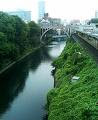
Kanda River
Reference : Ochanomizu
:::::::::::::::::::::::::::::::::::::::::::::::::::::::::::::::::::::::::::::::::::::::::::::::::::
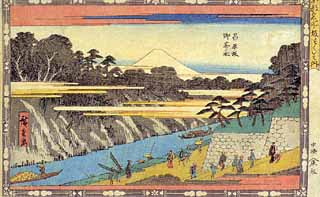
Hiroshige 広重
source : morikawa
:::::::::::::::::::::::::::::::::::::::::::::::::::::::::::::::::::::::::::::::::::::::::::::::::::
. Kawase Hasui 川瀬巴水 (1883 - 1957) .

Ochanomizu in snow
:::::::::::::::::::::::::::::::::::::::::::::::::::::::::::::::::::::::::::::::::::::::::::::::::::
Woodblockprint. Around 1932

Shotei Hokuju 昇亭北寿
source : hatsuzawa
:::::::::::::::::::::::::::::::::::::::::::::::::::::::::::::::::::::::::::::::::::::::::::::::::::

Kuniyoshi, Utagawa 歌川国芳
source : commons.wikimedia.org
quote
The name Ochanomizu came from an high-quality spring
which was used to make tea for the Shogun in the early Edo period.

:::::::::::::::::::::::::::::::::::::::::::::::::::::::::::::::::::::::::::::::::::::::::::::::::::
Yushima Seido 湯島聖堂

Bakufu school at Yushima Seido (Ochanomizu, Tokyo).
Confucianism was taught to the sons of bakufu samurais.
Edo Period:
source : www.grips.ac.jp/ Pre-conditions for Industrialization

- - - - - Founder of Yushima Seido:
. Hayashi Razan 林羅山 (1583 – March 7, 1657) .
:::::::::::::::::::::::::::::::::::::::::::::::::::::::::::::::::::::::::::::::::::::::::::::::::::
Kanda Myoojin 神田明神 Shrine
*****************************
Worldwide use
*****************************
Things found on the way
*****************************
HAIKU
切凧のくるくる舞やお茶の水
kire tako no kuru-kuru mau ya ocha no mizu
broken kite dancing
'round and 'round...
Ocha-no-Mizu
Kobayashi Issa
Tr. David Lanoue
*****************************
Related words
***** PLACE NAMES used in Haiku Japan and Worldwide
:::::::::::::::::::::::::::::::::::::::::::::::::::::::::::::::::::::::::::::::::::::::::::::::::::::::::::::::::::::::::::
. Japanese Legends - 伝説 民話 昔話 – ABC-List .
. Chiyoda ku 千代田区 Chiyoda ward .
reikon 霊魂 soul of a dead person
Once a samurai living in Ochanomizu killed his servant and the servant's angry soul begun possessing the man.
He had a miko 神子 shrine maiden come and perform rituals, but the shrine maiden took a knife and killed the samurai.
The same legend is told in
. Bunkyō 文京区 Bunkyo ward .
:::::::::::::::::::::::::::::::::::::::::::::::::::::::::::::::::::::::::::::::::::::::::::::::::::::::::::::::::::::::::::
[ . BACK to DARUMA MUSEUM TOP . ]
[ . BACK to WORLDKIGO . TOP . ]
- #ochanomizu #hasui
:::::::::::::::::::::::::::::::::::::::::::::::::::::::::::::::::::::::::::::::::::::::::::::::::::::::::::::::::::::::::::
5/16/2008
Hi no Oka Pass
[ . BACK to WORLDKIGO TOP . ]
:::::::::::::::::::::::::::::::::::::::::::::::::::::::::::::::::::::::::::::::::::::::::::::::::::
Hi no Oka Pass (Hi no Oka Tooge)
***** Location: Japan
***** Season: Non-seasonal Topic
***** Category: Earth
*****************************
Explanation
Hi-no-oka, Hinooka 日ノ岡 , 日の岡
Hi no Oka is an old town on the Tokaido Road, leading to a pass road in the outskirts of Kyoto toward Yamashina.
From the pass there is a long waterway toward the city of Kyoto with some sluices near Hi no Oka.
The grave of tenno Tenchi 天智天皇御陵 is close by.
The Jizo Statue at Hi no Oka
山科区日ノ岡一切経谷町
There are many small Buddha statues at the feet of this Jizo.
花崗岩製で2m近く丸彫り地蔵。江戸時代末の作風。宝珠と錫杖(鉄製)を持つポピュラーなお姿。国道1号線沿いの地蔵堂に大切に安置されています。このお地蔵さんの足下にたくさんの小石仏が置かれています。街道筋の石仏を集められたのでしょうか。
© shigeru.kommy.com
:::::::::::::::::::::::::::::::::::::::::::::::::::::::::::::::::::::::::::::::::::::::::::::::::::
*****************************
Worldwide use
*****************************
Things found on the way
*****************************
HAIKU
日の岡やこがれて暑き牛の舌
hinooka ya kogarete atsuki ushi no shita
(summer stanzas, #176)
Breezeless Hinooka
and hot to the point of burning
hangs the cart ox's tongue
trans. EM & HO
EM & HO comment:
"Hi no oka 日ノ岡," "Hill of the Sun" had a steep slope enclosed by hills that made it hot even by the standards of nearby Kyoto, as the poor straining beast shows.
Details are here : Introducing Haiku Poets:
Mizuta Masahide 水田 正秀
This pass road is situated on the east side of the mountain, so the morning sun hits the traveller and thus gave the name to this area, "Hill of the Sun".
:::::::::::::::::::::::::::::::::::::::::::::::::::::::::::::::::::::::::::::::::::::::::::::::::::
*****************************
Related words
***** WKD Reference
::::::::::::::::::::::::::::::::::::::::::::::::::::::::::::::::::::::::::::::::::::::::::::::::::
3/18/2008
Echigo - blind woman
[ . BACK to WORLDKIGO TOP . ]
:::::::::::::::::::::::::::::::::::::::::::::::::::::::::::::::::::::::::::::::::::::::::::::::::::
Blind woman (from Echigo) : Echigo Goze
***** Location:Japan
***** Season: Non-seasonal Topic
***** Category: Humanity
*****************************
Explanation
blind woman, goze 女盲, ごぜ, ゴゼ, 瞽女
blind nun, ama goze 尼ごぜ、あまごぜ
blind woman from Echigo, Echigo goze 越後女盲
越後ごぜ , 「瞽女(ごぜ)」
海御前(あまごぜ)

:::::::::::::::::::::::::::::::::::::::::::::::::::::::::::::::::::::::::::::::::::::::::::::::::::
The ideographs for goze mean "blind" and "woman."
The ideographs are, however, read in this manner because the word goze already existed. In fact, it probably derived from the term mekura gozen 盲御前, which also means blind woman (gozen is a formal second-person pronoun). Although the term goze can be found in medieval records, other terms such as mōjo 盲女, jomō 女盲 and the like were also in use (especially in written records) until the modern era. In the spoken language, the term goze was usually suffixed by an honorific: goze-san, goze-sa, goze-don, and the like.
Organizations
 From the Edo period (1600-1868) goze organized themselves in a number of ways. Few large-scale organizations have been found in urban areas, though during the nineteenth century some documents speak of a goze association in the city of Edo. In Osaka and some regional towns goze were sometimes informally linked to the pleasure quarters, where they were called to perform their songs at parties and the like.
Goze organizations developed most in rural areas and continued to exist in Niigata (once known as Echigo) and Nagano prefectures well into the twentieth century (the last important active goze, Kobayashi Haru 小林ハル, died in 2005, age 105).
From the Edo period onward, other goze groups were found from Kyushu in the south to approximately Yamagata and Fukushima prefectures in the north. Farther north blind women tended to become shamans (known as itako, waka, miko or the like) rather than goze.
Large and important groups were especially active in the Kantō and surrounding areas, in what are today Gunma, Saitama, Chiba, Shizuoka, Yamanashi, Tokyo-to. Other groups were formed in Nagano and Gifu prefectures, and somewhat farther south, in Aichi prefecture. In addition to the well-known groups of Niigata prefecture, groups existed in other areas along the western seaboard, including Toyama, Ishikawa, and Fukui prefectures.
Suzuki Shōei (1996 and elsewhere) divides the organizations of Echigo goze into three main types.
1. Goze organizations such as the one in Takada (today Jōetsu-shi), in which a limited number of goze houses (in early twentieth-century Takada 17) were concentrated in the city and in which each house was led by a master teacher who passed on the rights to her position and property to her top (or favorite) student after her death. Girls who wished to become goze had to move to the city and enter the house (fictitious family) of the goze teacher. Sometimes they were adopted by the teacher as a daughter.
2. Organizations such as the one centered on Nagaoka, in which goze remained in the countryside, often their own home, after completing their apprenticeship with a goze elsewhere. These goze teachers were loosely linked to one another by their relation to the goze head in Nagaoka (a position assumed by a goze who, after becoming the head, assumed the name Yamamoto Goi). Once each year the goze of the Nagaoka group assembled at their headquarters, the house of Yamamoto Goi, to celebrate a ceremony known as myōonkō (妙音講) in which their history and the rules of their organization was read out loud. A this they deliberated on what to do about members who had broken rules, ate a celebratory meal, and performed for one another.
3. Organizations such as the one found in Iida (Nagano prefecture), in which the position of head rotated among members.
The repertory of most goze has been lost, but songs of goze from Niigata, Nagano, Saitama, and Kagoshima prefectures have been recorded. The vast majority of these recordings are from what is today Niigata prefecture.
© More in the WIKIPEDIA !

Japanese Reference
高田瞽女の成り立ち Takada Goze
長岡瞽女 Nagaoka Goze
source : 越後瞽女(えちご ごぜ)
Singing On YouTube: ごぜうた・瞽女歌・ごぜ歌
source : www.echigo-gozeuta.com/
瞽女と瞽女唄の研究 : Groemer, Gerald
近世の川柳に見られる瞽女
source : bookweb.kinokuniya
瞽女(ごぜ)という盲目の女旅芸人がいた。
source : saikaku/yobansshi
ごぜのつらはらずに置いてしちをかり
江戸川潜流 安永四年
気の毒なことに、盲目の女と交わった後では、一発殴っておくと後難がないという俗信があったらしい。しかし、身体を戴いた上に金を借り,その上に殴るなど後味が悪い.
- Reference -
*****************************
Worldwide use
*****************************
Things found on the way
Echigo Province
Echigo (越後国, Echigo no kuni) was an old province in north-central Japan, on the Sea of Japan side, northernmost part of the Hokurikudō (北陸道)circuit. It bordered on Uzen, Iwashiro, Kozuke, Shinano, and Etchu provinces. Today the area is part of Niigata prefecture, which also includes the island which was the old Sado province.

Echigo was established by the division of Koshi province (越国 or 古志国) in the end of 7th century AD with Iwafune and Nutari District. It occupied the northeast part of Niigata prefecture today and was one of two border provinces with Emishi (the other is Mutsu). Echigo was given four districts of Kubiki, Koshi, Uonuma and Kanbara in 702. When Japan extended the territory a little northward in 708, Dewa District was established under Echigo. But this district transformed to Dewa Province in 712. Temporally Sado Province had been merged between 743 and 752. Since the division of Sado in 752, the territory of Echigo had never been changed.
Echigo was ruled by Uesugi Kenshin and his heirs during the Sengoku period; later it became a fief of Ieyasu's Matsudaira relatives.
© More in the WIKIPEDIA !
:::::::::::::::::::::::::::::::::::::::::::::::::::::::::::::::::::::::::::::::::::::::::::::::::::::
. Echigo joofu 越後上布(えちごじょうふ)
Joofu cloth from Echigo
kigo for all Summer
. Echigojishi 、越後獅子(えちごじし)lion dance from Echigo
kigo for the New Year
:::::::::::::::::::::::::::::::::::::::::::::::::::::::::::::::::::::::::::::::::::::::::::::::::::::
................... Issa's Haiku about Echigo
こがらしや壁のうしろはえちご山
kogarashi ya kabe no ushiro wa echigo yama
winter wind--
behind the wall
is the deep north
In Issa's time "the mountains of Echigo" would have been synonymous with a cold place in the north, but for most English readers this connotation is nonexistent.
another version
. facing the river--
next door, it seems
Echigo mountains
大雪や膳の際から越後山
ôyuki ya zen no kiwa kara echigo yama
heavy snow--
from the dinner tray's edge
Echigo mountains
越後馬夜露払って通りけり
echigo uma yo tsuyu haratte tôri keri
Echigo horse--
sweeping away the evening dew
in passing
Tr. David Lanoue

the "Jumping Horse of Echigo" appears on the slope of Mount Myokosen when the snow begins to melt and announces the spring season to the farmers.
Myookoosen 妙高山の雪形 ”跳ね馬 ”Mount Myokosan
:::::::::::::::::::::::::::::::::::::::::::::::::::::::::::::::::::::::::::::::::::::::::::::::::::::
Matsuo Basho 松尾芭蕉and his walk through the North of Japan:
. - - - Station 33 - Echigo 越後路 - - - .
*****************************
HAIKU
in Fifth Month rain
behind me too...
a blind woman from Echigo
satsuki ame mata ato kara mo echigo goze
五月雨又後からも越後女盲
by Issa, 1821
Shinji Ogawa notes that mata ato kara mo means "from the behind also (a blind woman from Echigo)," implying that there are other blind women from Echigo in front. He adds, "They may or may not be beggars. They might be on the way to Zenkooji Temple."
Tr. David Lanoue
:::::::::::::::::::::::::::::::::::::::::::::::::::::::::::::::::::::::::::::::::::::::::::::::::::
干し稲やごぜの姿となりにけり
hoshi ine ya goze no sugata to nari ni keri
drying rice -
they really look like
the blind singers

© shunrai.shashin-haiku.jp
*****************************
Related words
***** . Niigata Ryoori 新潟郷土料理
Local Food from Echigo and Niigata
***** . World Handicap Day / Black Day .
***** . WKD : Blind People .
shakutoo-e 積塔会 (しゃくとうえ)
ceremony for blind people
- #echigo -
:::::::::::::::::::::::::::::::::::::::::::::::::::::::::::::::::::::::::::::::::::::::::::::::::::::
[ . BACK to DARUMA MUSEUM TOP . ]
[ . BACK to WORLDKIGO . TOP . ]
:::::::::::::::::::::::::::::::::::::::::::::::::::::::::::::::::::::::::::::::::::::::::::::::::::::
3/01/2008
Matsushima - Ojima
[ . BACK to WORLDKIGO TOP . ]
:::::::::::::::::::::::::::::::::::::::::::::::::::::::::::::::::::::::::::::::::::::::::::::::::::
Matsushima 松島
***** Location: Japan
***** Season: Non-seasonal Topic
***** Category: Earth
*****************************
Explanation
Matsushima, a place name that resounds in the ears and
the heart of a seasoned haiku poet
... aaa, Matsushima ya!
Read more about the possible author
of this famous haiku below!


quote
Ranked by the Japanese as one of Japan's three great views (along with Miyajima and Amanohashidate), Matsushima has long been a popular touristical destination. The great poet Bashou Matsuo (1644-1694) came here and exclaimed in one of his most famous Haiku poem :
"Matsushima, Ah! Matsushima! Matsushima!".
Matsushima is made up of over 200 small, pine-tree covered (as its name indicated) islands. Take one of the boat cruises to Shiogama or Oku-Matsushima, or walk to the islands of Fukuura-jima and Oshima to fully appreciate the splendor of the landscape.
The Kanran-tei Pavillion (観欄亭) was given by Toyotomi Hideyoshi to the Date lords of Sendai for moon-viewing and tea ceremony.
The Godai-do Hall (五大堂), a minor wooden temple, was founded in 807 and has five statues enshrined by the same priest who founded the Zuiganji. It is only open once every 33 years, the next time being in 2006.
Further inside the land, a few hundreds meters due North of Matsushima Kaigan station is the Zuigan-ji temple (瑞巌寺). It was founded by the Tendai sect as early as 828, long before Sendai existed. The current structure was build by Sendai lord Date Masamune 伊達政宗 in 1606, and is one of Tohoku's finest Zen temple. Don't miss the lavish Seiryuden (清流殿)
© www.jref.com
.......................................................................
Zuiganji 瑞巌寺 Zuigan-Ji
91 Matsushima Chōnai, Matsushima-chō, Miyagi-gun
宮城県宮城郡松島町松島字町内91
- quote
Seiryuzan Zuigan-ji 青龍山 瑞巌寺
The temple, commonly referred to as Zuigan-ji, was originally founded in 828 by Jikaku Daishi 慈覚大師, but was rebuilt by the feudal lord Date Masamune from 1604 onwards using lumber brought from Mount Kumano in Wakayama Prefecture and skilled workmen from Kyoto and Kii. Hondō (Hōjō), the main building, which was completed in 1609, measures 39 meteres by 25.2 meters and houses the principal Buddhist image. Many parts of the temple have been designated as natural treasures and cultural assets. The haiku poet Bashō wrote a tribute to the golden walls inside the temple.
The Zuigan-ji temple caves housed the ashes of the deceased.
Zuigan-ji temple features a number of caves carved into the rock. These caves were used for memorial services and as a cinerarium to house the ashes of the deceased. The caves were constructed in the Kamakura period and remained in use until the Edo period.
The temple grounds also contain The Zuigan-ji Art Museum established on October 1, 1995 to display various artifacts, including calligraphy by former head monks, Fusuma paintings, tea cups and portraits.
The temple sustained major damage in the 2011 Tōhoku earthquake and tsunami.
© More in the WIKIPEDIA !
. . Pilgrimages to Fudo Temples 不動明王巡礼
Fudo Myo-O Junrei - - Tohoku Introduction . .
The main statue is a Fudo Myo-O, but this is secret and now shown.
The Maedachi statue is non known 前立不動尊
28 瑞巌寺 天台宗 - 五大明王 / 前立不動尊 Maedachi Fudo Son
- Chant of the temple
松島の邊りに浮かぶ五大堂
除災招福願い祈らん

.......................................................................
. Ennin - Jigaku Daishi 慈覚大師 .
(794 – 864)
Date Masamune 伊達政宗 (1567 - 1636)
Haiku by Masamune
A souvenir from Matsushima,
from the temple Zuigan-Ji and Godai-Doo 瑞巌寺と五大堂
. Etsuki Daruma 江月だるまこけし Kokeshi from Etsuki .
:::::::::::::::::::::::::::::::::::::::::::::::::::::::::::::::::::::::::::::::::::::::::::::::::::
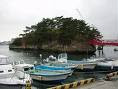
Shiogama Town 塩竃市
is one of the doorways to tourism in the famed Matsuhima Bay.
In the“Narrow Roads to the Deep North", the poet, Matsuo Basho, describes traveling from Shiogama to Matsushima by boat.
What is not so well known, however, is thefact that over half of the“808 Matsushima Islands" are actuallyin Shiogama. In particular, the inhabited Urato Islands attract many visitors who enjoy sunbathing, marine-sports, clamming, fishing, and rape-blossom viewing.
Shiogama and the
Sail-cord Festival (hote matsuri)... and Haiku
:::::::::::::::::::::::::::::::::::::::::::::::::::::::::::::::::::::::::::::::::::::::::::::::::::
Translating the name MATSUSHIMA
Thoughts by Larry Bole
Yagi Kametaro (1908-1986), in his book, "Haiku: Messages from Matsuyama," has a brief essay titled, "Proper Names in Japanese Haiku."
"...However, it does not follow that haiku is saturated with Zen. R.H. Blyth tried to see something of Zen philosophy in haiku, but Zen's influence on haiku has never been as dominant as he supposed. Among present-day Japanese haiku devotees, most know nothing of Zen. Anyway it is extremely difficult to try to define haiku in terms of some philosophical essence.
"In order to emphasize the particular, Japanese haikuists often use proper names. In a collection of Basho's haiku that lies at hand, thirty-four of the ninety-eight contain proper names. I count fewer in a book of Issa's haiku, but both men frequently made topical reference understood as proper names. Masaoka Shiki, too, used proper names to make his haiku specific...
[Kametaro then gives a couple of Shiki's haiku, with explanations, as examples]
"Many proper names have been recognized as season-words; some have become obsolete but others are being added. For example, the Hototgisu School of haiku recently recognized 'ogi-kuyo' as a local season-word for winter...
"The nature of haiku, with its limitations in time and place, naturally invites the haikuist to use local names. Unlike Western poets, haikuists have never presumed that their efforts would reach a nationwide audience. All through its history, haiku has been a literature of a limited group (called 'renju') who were familiar with the local names of their area and enjoyed using them in their haiku.
(October, 1974)" [end of exerpts]
I'm not sure I agree with this last statement, since Basho and other haiku poets traveled extensively, and brought back to their local haiku groups haiku which sometimes included non-local place names.
If one is translating for haiku aficionados, then "Matsuhima" would work. If one is translating for a larger audience, then "pine islands" would be helpful, although one would probably want to add an explanatory note anyway; so why not just start with "Matsushima?"
So I suggest: translate "Matsushima" as "Matsushima," and translate "shimajima" as "pine islands" (with an explanatory note appended).
*****************************
Worldwide use
*****************************
Things found on the way

見せばやな雄島のあまの袖だにも
ぬれにぞぬれし色はかはらず
Misebaya na Ojima no ama no Sode dani mo
Nure ni zo nureshi Iro wa kawarazu
Let me show him these!
Even the fishermen's sleeves
On Ojima's shores,
Though wet through and wet again,
Do not so change their colors.
90 - Inpu Moin no Taifu 殷富門院大輔
Attendant to Empress Inpu
. Ogura Hyakunin Isshu Poems 小倉百人一首 .
Ojima Island 雄島
is a pea shaped small island of 40 meters wide and 200 meters long.
The island used to be the spiritual training area for Bhuddist monks. There used to have about 100 caves used for the training. Also the island has stone monuments for Haiku poet Basho and Raiken, the Buddhist monk.
It is said the name of Matsushima originally derived from this island.
source : www.tripadvisor.com.sg
:::::::::::::::::::::::::::::::::::::::::::::::::::::::::::::::::::::::::::::::::::::::::::::::::::::::::::::::::::::::::::

- shared by Tadashi san - facebook
:::::::::::::::::::::::::::::::::::::::::::::::::::::::::::::::::::::::::::::::::::::::::::::::::::::::::::::::::::::::::::

Matsushima Kokeshi Wooden Doll with Daruma
. . . . . Matsushima, Fuku-Ura and Daruma
*****************************
HAIKU

松島やああ松島や松島や
Matsushima ya
aa Matsushima ya
Matsushima ya
attributed to Kyoka-Writer Monk Tahara Bo
狂歌師田原坊 (Tawara Boo, Tawarabo)
There is also this version by Monk Tawarabo
(his name can also be read TAHARA)
松島やさてまつしまや松島や
MATSUSHIMA ya sate Matsushima ya MATSUSHIMA ya
Other sources say
the author of this famous poem is not known.
About 90% of Japanese people would think this most famous poem about Matsushima was by Matsuo Basho, but it seems not the case. Japanese references say that Basho was too impressed by the beautiful landscape to write anything.
One commentator says he only came about the name TAWARABO when looking at English resources.
More LINKS about "Matsushima Ya" and 田原坊
Tawarabo 田原坊
He was born in Sagawa no Kuni (Kanagawa prefecture) in the late Edo Period. In Sagami, even now there are many people with the name of TAHARA.
He choose the reading of a famous warrior of the Heian period, Tawara no Hidesato 藤原秀郷, who was also called Tawara no Toota 俵藤太/ 田原藤太(たわらのとうた).

© www.bashouan.com
According to BashouAn, the first version of Tawarabo was the one with SATE (well then!), quoted above, which later changed to AA.
. Tawara Toota Hidesato 俵藤太秀郷 Tawara Tota .
.........................................
There are the three most famous scenic places in Japan, which are Amano-Hashidate, Matsushima and Itukushima (Miyajima near Hiroshima).
Matsushima is so famous in the fact that Basho Matsuo who was the most famous in Haiku couldn't compose good Haiku that is a Japanese poem of seventeen syllables.
Finally he gave up to compose his Haiku by the really beautiful great view.
So, his Haiku in Matsushima is...
Matsushima Ya,
Ah Matsushima Ya,
Matsushima Ya.
He just called Matsushima three times in his Haiku.
Can you guess how beautiful it is?
Look at some wonderful photos !
© mtfujiblog.blogspot.com
.........................................
- - - Matsushima, close to the northern city of Sendai
A cave is all that is necessary for Zen, and as a bonus nature provides the view of the island-dotted bay, of rocks and pines molded in fantastic shapes, so beautiful that it rendered even Basho (who visited Matsushima in 1689) speechless - the tradition tells that the great poet was so paralyzed by the scenic grandeur that he could not capture it in a haiku.
But this is a place of Zen and in the poet's "no-words" all words are contained. Emptiness, feeling no attachment, is the true attitude of the Zen adept and, in fact, all Buddhists. It is time to close my mouth and leave Matsushima alone.
© Ad G. Blankestijn, Japan
So it was NOT Matsuo Basho who wrote this famous poem!
Maybe by NOT writing about this place during his walk through the North of Japan, he made us aware of its unique beauty even more.

The Scenery of Matsushima
Tani Buncho (1763-1841), Edo period
The Clark Family Collection
. Tani Bunchoo 谷文晁 Tani Buncho .
:::::::::::::::::::::::::::::::::::::::::::::::::::::::::::::::::::::::::::::::::::::::::::::::::::
. Matsuo Basho 松尾芭蕉 - Archives of the WKD .
Matsuo Basho and his disciples
島々や千々に砕きて夏の海
shimajima ya chiji ni kudakete natsu no umi
islands and islands--
shattered into a thousand pieces,
summer's sea
Matsuo Basho
Tr. Barnhill
松島や鶴に身を借れほととぎす
matsushima ya tsuru ni mi o kare hototogisu
At Matsushima
Borrow your plumes from the crane
O nightingales!
Sora 曾良
(Tr. Donald Keene)
Clear voiced cuckoo,
Even you will need
The silver wings of a crane
To span the islands of Matsushima.
(Tr. Nobuyuki Yuasa)
.......................................................

source : British Museum
朝よさを誰松島ぞ片心
朝夜さを誰松島ぞ片心
asayosa o taga Matsushima zo katagokoro
asa yosa o taga Matsushima zo kata kokoro
morning and evening,
as if someone waits for me at Matsushima:
my unfulfilled love
Tr. David Landis Barnhill
morning and evening
someone waits at Matsushima!
one-sided love
"It was published in Basho's day in the brief 'zo' section of a seasonal collection."
Tr. Higginson
WKD: Senryu and Haiku
This last haiku has no season word. Basho argues that if it has a well-known place name like Matsushima, there is no need for a season and it will be in the section of "miscellaneous" haiku.
day and night
it is only Matsushima -
my great longing
Tr. Gabi Greve
Basho was planning his trip to Sendai and Matsushima
(Oku no Hosomichi) and was looking forward to see this famous place.

Waves at Matsushima
by 俵屋宗達 Tawaraya Sotatsu
.........................................
- - - Station 20 - Shiogama - - -
. Matsuo Basho 松尾芭蕉 - Archives of the WKD .
Station 21 - Matsushima
Much praise has already been lavished on the wonders of the islands of Matsushima. Yet if further praise is possible, I would like to say that here is the most beautiful spot in the whole country of Japan, and that the beauty of these islands is not in the least inferior to the beauty of Lake Dotei or Lake Seiko in China. The islands are situated in a bay about three miles wide in every direction and open to the sea through a narrow mouth on the south-east side. Just as the River Sekko in China is made full at each swell of the tide, so is this bay filled with the brimming water of the ocean and the innumerable islands are scattered over it from one end to the other.
Tall islands point to the sky and level ones prostrate themselves before the surges of water. Islands are piled above islands, and islands are joined to islands, so that they look exactly like parents caressing their children or walking with them arm in arm. The pines are of the freshest green and their branches are curved in exquisite lines, bent by the wind constantly blowing through them. Indeed, the beauty of the entire scene can only be compared to the most divinely endowed of feminine countenances, for who else could have created such beauty but the great god of nature himself? My pen strove in vain to equal this superb creation of divine artifice.
Ojima Island where I landed was in reality a peninsula projecting far out into the sea. This was the place where the priest Ungo had once retired, and the rock on which he used to sit for meditation was still there. I noticed a number of tiny cottages scattered among the pine trees and pale blue threads of smoke rising from them. I wondered what kind of people were living in those isolated houses, and was approaching one of them with a strange sense of yearning, when, as if to interrupt me, the moon rose glittering over the darkened sea, completing the full transformation to a night-time scene. I lodged in an inn overlooking the bay, and went to bed in my upstairs room with all the windows open. As I lay there in the midst of the roaring wind and driving clouds, I felt myself to be in a world totally different from the one I was accustomed to.
My companion Sora wrote:
Clear voiced cuckoo,
Even you will need
The silver wings of a crane
To span the islands of Matsushima.
I myself tried to fall asleep, supressing the surge of emotion from within, but my excitement was simply too great. I finally took out my notebook from my bag and read the poems given me by my friends at the time of my departure - Chinese poem by Sodo, a waka by Hara Anteki, haiku by Sampu and Dakushi, all about the islands of Matsushima.
I went to the Zuiganji temple on the eleventh. This temple was founded by Makabe no Heishiro after he had become a priest and returned from China, and was later enlarged by the Priest Ungo into a massive temple with seven stately halls embellished with gold. The priest I met at the temple was the thirty-second in descent from the founder. I also wondered in my mind where the temple of the much admired Priest Kenbutsu could have been situated.
Tr. by Nobuyuki Yuasa
- - - Station 21 - Matsushima 松島 - - -
. Matsuo Basho 松尾芭蕉 - Archives of the WKD .
:::::::::::::::::::::::::::::::::::::::::::::::::::::::::::::::::::::::::::::::::::::::::::::::::::
ISSA about Matsushima
松島や一こぶしづつ秋の暮
matsushima ya hito kobushi-zutsu aki no kure
little pine islands
fist after fist...
autumn dusk
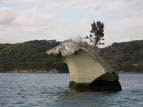
松島や小隅は暮て鳴雲雀
matsushima ya kosumi wa kurete naku hibari
darkness settles
over a tiny isle of pines...
a skylark singing
名月や角の小すみの小松島
meigetsu ya sumi no kosumi no ko matsushima
harvest moon--
in a little pine island's
little nook
Issa is referring to Matsushima, the famous sightseeing resort consisting of many tiny pine islands. Issa imagines that they look like fists jutting up from the water. While the Japanese reader will instantly get a mental picture from the proper name, Matsushima, the English reader may or may not. For this reason I have translated the name literally as "pine island." In an undated rewrite, Issa starts the poem with the phrase shima-jima: "islands."
The third phrase of this haiku, aki no kure, means both "autumn night" and "autumn's end."
Tr. David Lanoue

松島やあちの松から又雲雀
matusima ya achi no matsu kara mata hibari
Matsushima--
from yonder isle
another lark
Tr. David Lanoue
Haiga by Nakamura Sakuo
.............................................
Issa, translated by Lewis MacKenzie
Nomi domo ni Matsushima misete Nigasu zo yo
Come on, Fleas,
I'll show you Matsushima--
Then let you go.
Meigetsu ya Matsu nai shima mo Atama kazu
A radiant moon!
I can count them over too
The islets without pines.
*****************************
Related words
walking
a long, long path -
haiku
***** Oku no Hosomichi 2007
:::::::::::::::::::::::::::::::::::::::::::::::::::::::::::::::::::::::::::::::::::::::::::::::::::
Matsushima – ein Gedicht
Die Inselwelt von Matsushima gehört zu den drei schönsten Landschaften Japans, zusammen mit Amanohashidate in der Präfektur Kyoto und dem Shintō-Schrein Itsukushima in der Nähe von Hiroshima.
Vom Schiff aus bieten unzählige Inseln mit knorrigen, gewundenen Kiefern, zackigen Felsen und tief eingeschnittene Buchten immer wieder neue, faszinierende Ausblicke. Aus dem Wasser ragen an vielen Stellen die Stangen der Austernfarmen und die Restaurants im Hafen von Matsushima erfreuen den hungrigen Reise-Gourmet mit einer Vielfalt von Austerngerichten.
Selbst bei Regen und Nebel ist diese Klippenlandschaft noch faszinierend schön. Daher ist es nicht weiter verwunderlich, dass Matsushima ein Motiv zahlreicher literarischer Werke wurde. Auch der bekannteste Haiku-Dichter Matsu Bashō (1644–1694) kam nach Matsushima. Er beschrieb die Inseln als »Meisterwerke himmlischer Schöpfergottheiten – welcher Mensch könnte sie ausführlich genug mit Pinsel oder mit Worten beschreiben?«
In der japanischen Literatur spielt Reisedichtung eine bedeutende Rolle. Die Gedichte und Wegbeschreibungen, die auf Reisen entstanden, waren äußerst geschätzt und populär. Die Wanderungen oder Pilgerreisen von Dichtern waren dabei oft Ausdruck einer religiös-philosophischen Haltung. »Die Jahre, die vorbeiziehen, sind auch nur Reisende im Laufe der Zeiten«, schrieb Matsuo Bashō im Vorwort zu seinem bekannten Reisebericht durch Tohoku »Auf schmalen Pfaden durchs Hinterland« oku no hosomichi ... das koennte man wohl gross schreiben Oku no Hosomichi ? . Er folgte den Spuren namhafter Poeten vor ihm, insbesondere Saigyō Hōshi (1118–1190), dem bekanntesten dichtenden Wanderpriester der Heian-Zeit (794–1185).
Matsuo Bashō wurde 1644 in Iga Ueno geboren, einer kleinen Stadt in der heutigen Präfektur Mie. Hier schrieb er seine ersten Gedichte. Später lebte er im damaligen Regierungssitz Edo, dem heutigen Tokyo. In Fukagawa, einem Vorort von Edo, wohnte er in einem ruhigen Anwesen mit einer Bananenstaude (Bashō) am Tor, der er seinen Dichternamen verdankt – Bashō-san, Herr Bananenstaude.
Gemeinsam mit seinem Schüler Sora brach Bashō, damals 45-jährig, im Mai 1689 auf und bewältigte 2400 Kilometer zu Fuß. Diese außerordentliche Leistung erforderte gute Gesundheit und Selbstdisziplin. Denn neben der mühsamen Wanderung über enge Bergpfade warteten unterwegs zahlreiche andere Widrigkeiten. Allein ein geeignetes Nachtlager zu finden und darauf zur Ruhe zu kommen, war bei der großen Zahl der Flöhe und Läuse nicht leicht.
Bashō beobachtete auf seinen Reisen die Menschen bei ihren alltäglichen Verrichtungen auf den Feldern oder in der Küche:
Eine Frau wäscht Kartoffeln . . .
Wenn ich der Dichter Saigyō wäre,
würde ich jetzt ein Gedicht schreiben
Das Essen und die je nach Saison unterschiedlichen Zutaten spielen seit jeher eine wichtige Rolle für den aufmerksamen Reisenden und werden oft in der Dichtung Japans besungen. So freut sich Bashōs Reisebegleiter Sora auf dem Weg entlang des Japanischen Meeres im Ort Kisagata auch auf kulinarische Genüsse und dichtete:
Kisagata an einem Festtag!
Was es hier wohl für
Spezialitäten gibt?
:::::::::::::::::::::::::::::::::::::::::::::::::::::::::::::::::::::::::::::::::::::::::::::::::::
March 11, 2011 - Great East Japan Earthquake -
. The Great East Japan Earthquake .
:::::::::::::::::::::::::::::::::::::::::::::::::::::::::::::::::::::::::::::::::::::::::::::::::::
[ . BACK to DARUMA MUSEUM TOP . ]
[ . BACK to WORLDKIGO . TOP . ]
:::::::::::::::::::::::::::::::::::::::::::::::::::::::::::::::::::::::::::::::::::::::::::::::::::::
1/15/2008
Mount Utsu
[ . BACK to WORLDKIGO TOP . ]
:::::::::::::::::::::::::::::::::::::::::::::::::::::::::::::::::::::::::::::::::::::::::::::::::::
Mount Utsu
***** Location: Japan
***** Season: Non-seasonal Topic
***** Category: Earth
*****************************
Explanation
Lit. "Mount Reality", in literature indicating the dream world contrasting with the real world.
Utsu Mountain in Shizuoka prefecture
utsu no yama, うつのやま(宇津の山)
Utsuyama 宇津山 、うつの山
Pass road at Utsu Valley, utsu no ya tooge 宇津ノ谷(うつのや) 峠

:::::::::::::::::::::::::::::::::::::::::::::::::::::::::::::::::::::::::::::::::::::::::::::::::::
Along the Tokaido Road, Station Nr. 22
at Okabe 岡部, near Shizuoka town
"Narrow Road of the Ivy creeper",
Tsuta no Hosomichi 蔦の細道
This pass is famous in poetry for its moon viewing, the ivy and maples in autumn.
宇津の山峯の細道
僧正行意
つゆふかき
蔦のほそみち
わけ越て
をかべにかゝる
うつの山もと
家隆
宇津の山
月だにもらぬ
草の庵
夢路たえたる
松風ぞふく

Down in the valley there was a famous tea house where 10 rice dumplings stringed on a rope were served (to dango 十団子). They could be easily carried and eaten on the road.
The story of the 10 dumplings in more detail is below.
© www.humi.keio.ac.jp
:::::::::::::::::::::::::::::::::::::::::::::::::::::::::::::::::::::::::::::::::::::::::::::::::::::
This mountain and the Ivy pass was subject of poetry already in the "Tales of Ise" Ise Monogatari, in episode number 9, "Toward the East", Azuma Kudari 東下り. Written in the mid 10th century.
Ariwara no Narihira 在原業平 (825-880) travelled up this pass toward Azuma (Edo, Tokyo), when he met a travelling ascetic monk with a typical backpack, who was on his way back to Kyoto. Narihira then wrote a note for his beloved in Kyoto and entrusted the monk with delivering it:

© narihira/ise
Suruga naru
Utsu no yamabe no
utsutsu ni mo
yume ni mo hito ni
awanu narikeri
駿河なる 宇津の山辺の うつつにも
夢にも人に あわぬなりけり
in Suruga
close to Mount Utsu
you are not there
even in my dreams
I can not meet you
Tr. Gabi Greve
Further Reference
Tales of Ise (Ise monogatari 伊勢物語)
There are illustrations which only feature the ivy creepers and the special backpack of the ascetic. Poets will then know, which story the painting is referring to.
:::::::::::::::::::::::::::::::::::::::::::::::::::::::::::::::::::::::::::::::::::::::::::::::::::::
Woodblocks by Utagawa Hiroshige
歌川広重: 「岡部 宇津の山」


:::::::::::::::::::::::::::::::::::::::::::::::::::::::::::::::::::::::::::::::::::::::::::::::::::::
A Folding Screen (byoobu 屏風)
by Fukae Roshu (1699 - 1757)

The subject of Roshu's byobu lies in the later Heian era, tucked away in a poem contained in the anthology Tales of Ise: a courtier (in the blue outer robe) traveling far from the capital happens upon an itinerant monk on a pass on Mount Utsu in eastern Japan. He entrusts the monk with a letter to a former lover in the capital, Kyoto, from which he has been exiled.
The poignancy of the subject, set in this charged and luminous setting, attracted Roshu (who was not a prolific artist) more than any other Edo painter, perhaps because he found himself exiled at the age of sixteen on account of a scandal involving his father.
Roshu's painting could be mistaken for a copy of one from the twelfth century, or perhaps even a rediscovered original, were it not for the attractive splotches of watery ink that lend surface texture to the darker rocks and mountain forms. Known as tarashikomi, this diffused ink technique became popular among the Rinpa school artists early in the seventeenth century.
© www.clevelandart.org
::::::::::::::::::::::::::::::::::::::::::::::::::::::::::::::::::::::::::::::::::::::::::::::::::
Tales of Ise (Ise monogatari): "Utsu no yama"
by Tawaraya Sotatsu (died ca. 1640),
calligraphy by Takeuchi Toshiharu (1611–1647)

Property of Mary Griggs Burke
© The Metropolitan Museum of Art.
:::::::::::::::::::::::::::::::::::::::::::::::::::::::::::::::::::::::::::::::::::::::::::::::::::
Incense container "Mount Utsu (Utsu no Yama) "
by Ohi Soshun (Rikichi Nara)
(1851-1927)

© Photo curtesy of www.asianart.com
:::::::::::::::::::::::::::::::::::::::::::::::::::::::::::::::::::::::::::::::::::::::::::::::::::
In Hokkaido
Near to Hakodate Matsumae boasts well over five thousand cheery trees and a reputation as one of the best places for cherry-blossom viewing in the north of Japan. This is also the old Tokugawa Shogunate's stronghold on Hokkaido (under the Matsumae family) and has a castle (a replica of the original destroyed in 1949 by fire). Across the bay from Hakodate is Lake Toya, south of Sapporo.
This hot spring resort reminds you of the origins of the onsen - the nearby volcanoes are still active. The last eruption of Mount Utsu was 31 March 2000, and Shinzan 昭和新山 or "new mountain" at 402 metres high was formed in 1945, two years after a large earthquake in the area.
© www.edutraveller.com
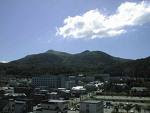
This mountain is usually called Mount Usu,
USUZAN 有珠山(うすざん).
More Reference !
*****************************
Worldwide use
*****************************
Things found on the way
Book with photos of the Old Tokaido (Tookaidoo)
The Tōkaidō Road: Traveling and Representation in EDO and Meiji Japan
Von Jilly Traganou
*****************************
HAIKU
うらがれや馬も餅くふ宇津(うつ)の山
uragare ya uma mo mochi ku Utsu no yama
On Mount Utsu
All is withered and desolate:
The horse also eats the mochi.
榎本 其角 Kikaku
Tr. Blyth
:::::::::::::::::::::::::::::::::::::::::::::::::::::::::::::::::::::::::::::::::::::::::::::::::::::
宇津の山女に夜着を借て寝る
Utsu no yama onna ni yogi o karite neru
Mount Utsu -
from a woman I borrow
a night quilt and sleep
a pupil of Matsuo Basho, probably Otokuni, in a renku
Saga Diary, April 25
Tr. Gabi Greve
Saga Diary (Saga Nikki)
:::::::::::::::::::::::::::::::::::::::::::::::::::::::::::::::::::::::::::::::::::::::::::::::::::::
宇津の山捨たいやうな鑓に逢
Utsu no yama sutetai yoo na yari ni ai
Mount Utsu -
I find a spear
that I want to throw away
Mutama 武玉川
At this mountain pass, robbers and poor samurai often tried to get some provisions by assaulting the travellers.
:::::::::::::::::::::::::::::::::::::::::::::::::::::::::::::::::::::::::::::::::::::::::::::::::::::
Ten rice dumplings, todango 十団子(とだんご)

十団子も 小粒になりぬ 秋の風
to dango mo kotsubu ni narinu aki no kaze
ten rice dumplings
getting ever smaller --
autumn wind
Kyoroku (aka Kyoriku) (1656-1715)
Tr. Gabi Greve
... ... ... ... ... ... ...
These dumplings too
Have got smaller:
The autumn wind.
'Toodango' were specialties of Utsunoya Pass in the Province of Tsuruga, so named because ten were cooked at one time in a saucepan, and later, sold in batches of ten. Kyoroku says that they seem to have got smaller than before, and this is a delicate if somewhat gastronomical observation. However, when we read Basho's econiums of this verse--he says it has 'shiori'--we realize that there is more in this verse than meets the eye, or the mouth, for the decrease in size of the 'toodago' is part of that general tendency of things to decline in quality and quantity.
Tr. and comment by Blyth
... ... ... ... ... ... ...
According to 'Kyoraishoo' ... Basho praised the following hokku by Kyoriku for possessing 'shiori'.
even the Ten Dumplings
have turned to crumbs--
autumn winds
The tea shops at Utsunoyama (Utsu Mountain), one of the difficult passes on the Tookaidoo (Eastern Highway) in Suruga (Shizuoka), were famous for their Ten Dumplings ('toodango', a haikai word), small dumplings sold in units of ten skewered on a stick or string. The hokku suggests that the mountain villages, which made their living by selling special products to travelers, are now in straitened circumstances, causing even their famous dumplings to become smaller. The implied sense of pathos and disappointment is echoed by the "winds of autumn" ('aki no kaze'), a classical phrase associated with loneliness.
Tr. and comment by Haruo Shirane
"Traces of Dreams"
... ... ... ... ... ... ... ... ... ... ... ... ... ... ... ...

Checking a bit more on these famous "Todango" dumplings.
宇津ノ谷の十団子
They were originally an offering for Jizo Bosatsu during his festival of "Jizo Bon" at the temple Keiryu-Ji 慶龍寺.
Some where made from rice flower and are as small as big soy beans; they are strung on a small rope, they were supposed to imitate a rosary. Five of these made one set. They are consecrated at the temple and then hung at the eaves of the home to ward off evil and bring good luck to the family.
Here is the beginning story about the
origin of these dumplings:
A priest at the temple Bairin-In 梅林院 had become very ill and made his apprentice monk suck the blood out of his boils. The young man leaned to eat human flesh in the process and turned into a man-eating demon who waited for people ascending the pass and attack them.
Later when Fujiwara Narihira passed the area, he prayed to Jizo for help in this. So Jizo turned himself into a wandering monk and walked along the pass. When the monk met the demon, they had a discussion and the monk challenged the demon to change himself into something so small that he could hold it in his hand.
The demon changed his figure and appeared as ten little balls in the hand of the monk/Jizo. The monk without hesitation swallowed the ten little balls and thus the demon disappeared from the area. Jizo became the protector deity of the area and travellers were safe from then on ... or so they say!

This is a different kind, with colored dumplings and the mask of the little demon, which is still sold today as a souvenir.
PHOTOS : www.m-mizoguti.com
. Ariwara no Narihira 在原業平 .
.......................................................................

At the shrine Atsuta Jingu 熱田神宮の 藤団子 "fuji dango" are also sold as souvenirs.There they have the form of ten rings in five different colors, purple, white, red, yellow and blue and serve as a talisman for the grain production. They are strung on a line of hemp. Since they also resemble the hanging flowers of a wisteria, they are written with the Chinese character for this flower, 藤. Others say the spelling with this character comes from the name of the Fujiwara 藤原 priest of this shrine in the Heian period.
© PHOTO : www.okashi-net.com
. Shrine Atsuta Jingu 熱田神宮 .
Here is another scene of these famous dumplings.
Some are stuck on skewers and held in a straw pillar to offer easily to the tired travellers. They look almost like barbequed fish on a stick.

© PHOTO : blog.urban-green.jp
*****************************
Related words
***** Mountain, peak, hill (yama, gake, oka)
***** . The 53 stations of the Tokaido .
東海道五十三次
:::::::::::::::::::::::::::::::::::::::::::::::::::::::::::::::::::::::::::::::::::::::::::::::::::::::::::::::::::::::::::
[ . BACK to DARUMA MUSEUM TOP . ]
[ . BACK to WORLDKIGO . TOP . ]
:::::::::::::::::::::::::::::::::::::::::::::::::::::::::::::::::::::::::::::::::::::::::::::::::::::::::::::::::::::::::::


 Posts
Posts


