[ . BACK to WORLDKIGO TOP . ]
:::::::::::::::::::::::::::::::::::::::::::::::::::::::::::::::::::::::::::::::::::::::::::::::::::
Shimosato Chisoku 下里知足
(1640 - 1704)
He was in the sake business, named Chiyokura 千代倉 and had a rich estate.
Basho had sent him various letters during his travels.
He lived in Narumi 鳴海の知足亭, now Nagoya.
Narumi no Chisoku Tei 鳴海の知足亭
Narumi was a postal station of the Tokaido road and business was good.
Chisoku's Buddhist name after death was Shakushoo 寂照.
- - - - -
鳴海宿 千代倉 Narumi Chiyokura

Now there is a soba noodles shop in front of the estate of
Chiyokura in Narumi.
Click for more photos.
for 児玉重辰 Kodama Jushin, see below
:::::::::::::::::::::::::::::::::::::::::::::::::::::::::::::::::::::::::::::::::::::::::::::::::::::::
Matsuo Basho stayed at his home various times
and wrote hokku to greet him and his family.
よき家や雀よろこぶ背戸の粟
yoki ie ya suzume yorokobu sedo no awa
. what a splendid house -
the sparrows are delighted
with millet at the back door .
Written by Basho on the 8th day of the 7th lunar month, 1684
貞亨元年7月8日
This became the hokku for a kasen 歌仙.
This poem was a congratulation to the younger brother of Chisoku in Narumi on the building of his new home.
Brother 下里三郎右衛門 Shimosato Saburoemon.
He added a note for Chisoku
まぐさに見ゆる野菊苅萱
magusa ni miyuru nogiku karu kaya
. Matsuo Basho 松尾芭蕉 - Archives of the WKD .

memorial stone at temple Seigan-Ji 誓願寺, Nagoya
Basho about Narumi-juku 鳴海宿
The statue of Basho was made by Takashima Kaemon. 高島 嘉右衛門.
Kaemon, his name was also 寺島安信, was one of the six students of Basho in Narumi.
. MORE about Matsuo Basho and Narumi 鳴海宿 .
鳴海 「誓願寺」 芭蕉堂の芭蕉像
Statue of Matsuo Basho at Temple Seigan-Ji
.............................................................................
Basho staying at Narumi
(Oi no Kobumi)

source : www.humi.keio.ac.jp
Hiroshige 広重
Hoshizaki and the Narumagata 鳴海潟
seen from Mount Sanno Yama 三王山.
There is now also a memorial stone with Basho's poem.
chidori zuka 千鳥塚
in memory of a kukai meeting in 1687 貞享4年
- - - - - Basho wrote:
星崎の闇を見よとや啼く千鳥
Hoshizaki no yami o miyo to ya naku chidori
"gaze into
the darkness of Star Cape":
is this the plovers' cry?
Tr. Barnhill
I was told that Lord Asukai Masaaki had stayed at this inn and written a poem that he presented to the innkeeper:
today the capital
seems even more distant
here at Narumi Bay
looking across the vast sea
that separates me from home
kyoo wa nao miyako mo tooku narumigata
harukeki umi o naka ni hedatete
((Masaaki 飛鳥井雅章)
Tr. Barnhill
The sea at Narumi has since olden times been famous for its plovers.
. Plover (chidori) .
. Matsuo Basho and his disciples .
:::::::::::::::::::::::::::::::::::::::::::::::::::::::::::::::::::::::::::::::::::::::::::::::::::::::
Chisoku - Narumi no Monjin disciple
鳴海(現在名古屋市緑区鳴海町)の門人。
鳴海は東海道の宿場であった。下里<しもさと>知足は、千代倉という屋号の造り酒屋の当主で富豪であった。法名は寂照<じゃくしょう>。
『笈の小文』の旅の途次芭蕉はここに休息している。彼に宛てた芭蕉の真蹟書簡6通がある。なお、知足自筆の『知足斎日々記』延宝8年7月3日の条に、芭蕉宛に自著(『大柿鳴海桑名名古屋四ツ替り』)を送った記録があり、その自著内の句寄稿者蘭には松尾桃青の所在について江戸「小田原町 小澤太郎兵衛店、松尾桃青」の記述があるので、これがこの時期の芭蕉の動静の貴重な記録となっている。
source : itoyo/basho
知足宛書簡1(貞亨3年閏3月16日)
知足宛書簡2 (貞亨3年10月29日)
知足宛書簡3 (貞亨3年12月1日)
知足宛書簡4 (貞亨4年1月20日)
知足宛書簡5 (貞亨4年春)
知足宛書簡6 (貞亨4年11月24日)
The letters
先日貴墨並短尺廿枚相届*、請取申候。愈御無事に御勤被レ成候哉、珍重奉レ存候。爰元別条無二御座一候。内々頃日者上京可レ致覚悟に御座候へ共*、何角障事共心にまかせず候而、いまだ在庵罷有候。夏之中には登り可レ申候間、其節立寄可レ得二御意一候。
一、短尺大かた出来いたし候へ共*、爰元はかりそめにも出合遠方*、其上人々ケ様之事共に取込罷有候故*、延引に成候。拙者門弟共は皆々かかせ申候*。他筆宗匠共*のをまじへ可レ申と、是故少調兼候*。追付相調候而登せ可レ申候*。
壬三月十六日 芭蕉桃青 書判
寂照老子*
尚尚髪剃壱丁、対一本*、被レ懸二御意一、誠忝奉レ存候*。
--------------------------------------------------------------------------------
(別紙)
追啓*申上候。此僧二人*、拙者同庵に而御座候。上京修業に被レ出候而、長除(途)草臥可レ被レ申候間*、二三日御とめ休息いたし通候様に奉レ頼候。近比馴馴敷御事ながら*、行脚修業の僧に而御座候間、二三日御とめ、足を少やすめ候而御とをし被レ成可レ被レ下候。今程御閙敷*時節に御座候間、如風様御方に御とめ被レ成可レ被レ下候様に奉レ頼候*。
大キウ和尚拝いたし度ねがいに御座候間*、其段も奉レ頼候。
壬三月十六日 芭蕉桃青 書判
下里寂照老子
. . . . .
知足宛書簡2 (貞亨3年10月29日)
先日糀町何某殿御上り之節、短尺少進之レ候*。御一覧可レ被レ成候。又此度宗匠共ノヲ進レ之候。御受取可レ被レ成候。
愈御堅固被レ成二御座一候哉。御懐布奉レ存候*。拙者も当年上京可レ致候へ共、もはや寒気に移候故思ひ留り候*。来年はかならず上り候而、可レ得二御意一候。互に露命頼計に御座候*。
御連衆、尤如風貴僧、可レ然御心得奉レ頼候*。当春、道心両僧*、御厚志之段、毎々申被レ出、於二拙者一過分至極奉レ存候*。重而委曲可レ得二御意一候*。以上 頓首
十月二十九日 芭蕉桃青
寂照叟
人々御中
知足宛書簡3 (貞亨3年12月1日)
貴墨*、殊更御国名物宮重大根弍本被レ懸二芳慮一忝*、尤賞玩可レ仕候*。毎々御懇情不レ浅、忝奉レ存候。愈御堅固珍重、此方露命いまだ無レ恙候。当夏秋之比上り可レ申覚悟に御座候へ共、何角心中障る事共出来延引*、浮生余り自由さに心変猶々難レ定候*。
一、短尺十三枚、其後戸田左衛門表より之便りに七左衛門殿*迄頼、又々進じ候。
猶追々力次第に頼候而上せ可レ申候間*、老養御楽み可レ被レ成候*。此比は発句も不レ仕、人のも不レ承候。猶思ひ付候而重而此便りに可レ懸二御目一候*。七左衛門殿へも御無さた、心計は何としてかとしてとのみ存候而、御書状さへ不レ得二御意一候。御懐敷候。其元御連衆如風様*へも可レ然奉レ頼候*。御使も(ま)たせ置、返事したため候故、何を書候も不レ覚候。無常迅速*々々。
極月一日 芭蕉桃青 書判
寂照様
貴報
尚々俳諧等折々御座候哉、承度候。誠誠遠路不レ絶御案内のみならず、御音信、御心ざし厚き事筆頭難レ尽候*。
. . . . .
知足宛書簡4 (貞亨4年1月20日)
新暦之慶賀、重畳申納候*。愈御無事に御重年可レ被レ成と珍重奉レ存候*。爰元相替義(儀)も無二御座一候。其元歳旦など被レ成レ候哉、承◆(り?)度のみ。爰元三つ物*、京板*に参候よし、定而御覧可レ被レ成候へ共、もしもしいまだ不レ参候かと存、句計書付申候*。
気晴ては虹立空かよもの春 其角
歳暮
月雪とのさばりけらし年の暮 愚句
年取や俵ごまめを場につみて 文鱗
其外数多事、指置候。去年、五右衛門殿便りに短尺進じ候*。其後戸田左衛門殿飛脚に遣し候*。相届候哉、無二心元一奉レ存候。何とぞ当年は又々上京、可レ得二御意一と存候。 以上
正月二十日 桃青
寂照居士
. . . . .
知足宛書簡5 (貞亨4年春)
この御寺の縁記(起)*、人のかたるを聞侍て
かさ寺やもらぬ岩屋もはるのあめ
武城江東散人芭蕉桃青*
笠寺の発句度々被二仰下一候故*、此度進覧申候。よきやうに清書被レ成、奉納可レ被レ成候。委曲夏中可レ得御意候*。 以上
寂照叟
. . . . .
知足宛書簡6 (貞亨4年11月24日)
為二御見舞一三良(郎?)左衛門殿被レ遣、誠辱奉レ存候*。今日は若御出可レ被レ成かと御亭主共に相待居申候處*、御残多義(儀?)に御座候*。先以此度は緩々滞留*、さまざま御懇情御馳走、御礼難二申尽一候。はいかい急に風俗改り候様にと心せかれ*、御耳にさはるべき事のみ、御免被レ成可レ被レ下候*。され共風俗そろそろ改り候はば、猶露命しばらくの形見共思召可レ被レ下候*。なごやよりも日々に便被レ致候間、明日荷兮*迄参可レ申候はんと存候。持病心気ざし候処、又咳気いたし*、薬給(食?)申候。なごやにても養生可レ成事に御座候間、明日比なごやへと存候。
一、先日笠寺まで御連中御送被レ成、御厚志候こと、可レ然御礼御意得奉レ頼候*。如意寺様*猶又よろしくたのみ奉レ存候。追付発足、山中より以二書状一具可二申上一候*。二三日此かた両吟致*、大かた出かし候。出来候はば被懸二御目一候様に、草々以上。
霜月廿四日
寂照居士 芭蕉翁
御報
尚々今日は御入来可レ被レ成と相待候処、近比近比御残多奉レ存候*。かへすがへす此度万事御懇意忝難レ尽候*。
::::::::::::::::::::::::::::::::::::::::::::::::::::::::::::::::::::::::::::::::::::::::::::::::::
来迎山誓願寺 Temple Seigan-Ji
The statue of Basho is kept in this temple.
His disciples held a memorial haiku meeting for him
on the 12th day of the 11th lunar month in 1694

松尾芭蕉の木像を安置した芭蕉堂の脇にある芭蕉供養塔は、最古の供養碑として知られています。高さ60cmほどの青色自然石で、表面に「芭蕉翁」、背面に没年月日が刻まれています。
芭蕉が没した翌月の元禄7年(1694)11月12日に当地の芭蕉門下が追悼句会を営んだ折り、如意寺に建てられたもので、その後、翁の門下人下里知足の菩提寺である当寺に移されました。

Temple Seigan-Ji 誓願寺
名古屋市緑区鳴海町根古屋16
source : bashoseiganji
::::::::::::::::::::::::::::::::::::::::::::::::::::::::::::::::::::::::::::::::::::::::::::::::::
Japanese Reference
- 下里知足 -
:::::::::::::::::::::::::::::::::::::::::::::::::::::::::::::::::::::::::::::::::::::::::::::::::::::::::::::::::
:::::::::::::::::::::::::::::::::::::::::::::::::::::::::::::::::::::::::::::::::::::::::::::::::::::::::::::::::
Kodama Juushin 児玉重辰 Kodama Jushin
(? - 1727)
He was a transport merchant in Narumi 荷物問屋.
Basho visited Narumi in Autumn of 1688 貞亨5年7月10日立秋.
Basho wrote the following hokku as a greeting to his host, to praise the beautiful scene.
The Haiku Meeting and Kasen with Jushin - 児玉重辰興行歌仙.
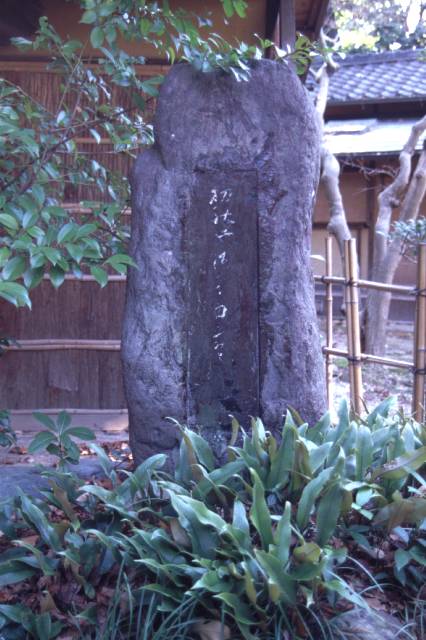
初秋や海も青田も一みどり
hatsu aki ya umi mo aota mo hito midori
The beginning of autumn;
The sea and fields,
All one same green.
Tr. Eri Takase
Now autumn begins,
the sea and all the fields
the same shade of green
Tr. Sam Hamill
Two other versions of this hokku
初秋は海やら田やら緑哉 / (真蹟草稿歌仙巻)
鳴海潟や青田に変る一みどり / (かしま紀行)
source : itoyo/basho
Memorial stone at the shrine Narumi Jinja in Narumi 鳴海町字乙子山 成海神社
Deities in residence
日本武尊 Yamato Takeru no Mikoto
宮簀媛命 Miyazu Hime no Mikoto
建稲種命 Takeinadane no Mikoto
. Visiting places with Matsuo Basho 松尾芭蕉 .
. Narumi Jinja 成海神社 and Daruma .
Narumi-juku 鳴海宿 post station on the Tokaido Road
*****************************
Related words
***** . WKD : Millet (awa, hie) .
and Matsuo Basho
***** Introducing Japanese Haiku Poets
[ . BACK to WORLDKIGO . TOP . ]
:::::::::::::::::::::::::::::::::::::::::::::::::::::::::::::::::::::::::::::::::::::::::::::::::::::
11/03/2012
Shimosato Chisoku

10/15/2012
Tudor Gheorghe
[ . BACK to WORLDKIGO TOP . ]
:::::::::::::::::::::::::::::::::::::::::::::::::::::::::::::::::::::::::::::::::::::::::::::::::::
Tudor Gheorghe
(born August 1, 1945)
is a Romanian musician, actor and poet known primarily for his politically charged musical career and his collaborations with well known figures of late 20th century Romanian poetry. Tudor's recording work is often associated with anti communist activism and has received much critical acclaim during the years. The son of an Iron Guard member, he was forced to take a 4 year break from music by communist authorities after a series of concerts in which he performed songs with politically charged content by renowned Romanian author Ion Luca Caragiale.
He was listed as number 76 on the 2006 100 Greatest Romanians of All Time. Born on August 1, 1945 in Podari, Dolj County, Tudor Gheorghe had a rough childhood as his father was arrested on political grounds and sent to prison in Aiud. His own concerts were banned during the last years of communism.

"Every time I listen to him - and this happens often - Tudor Gheorghe confirms my hunch that Romanian poetry can move mountains"
(Marin Sorescu).
© More in the WIKIPEDIA !
::::::::::::::::::::::::::::::::::::::::::::::::::::::::::::::::::::::::::::::::::::::::::::::::::

Reference
. Tudor Gheorghe .
::::::::::::::::::::::::::::::::::::::::::::::::::::::::::::::::::::::::::::::::::::::::::::::::::
Haiku and Senryu
geometry in colors
spreads fall
over forests
Tudor Gheorghe -
a crazy acacia
and lute's
Alex Serban
Romania
::::::::::::::::::::::::::::::::::::::::::::::::::::::::::::::::::::::::::::::::::::::::::::::::::
their eyes
caught in celestial poplars
Autumn was never ...
Heike Gewi
"Autumn was never (this beautiful)..."
the english version of Tudor's poem in romanian language
source : www.youtube.com
*****************************
Related words
***** . Personal Names used in Haiku
Introduction .
***** . Music and Haiku
[ . BACK to DARUMA MUSEUM TOP . ]
[ . BACK to WORLDKIGO . TOP . ]
:::::::::::::::::::::::::::::::::::::::::::::::::::::::::::::::::::::::::::::::::::::::::::::::::::::
10/14/2012
Felix Baumgartner
[ . BACK to WORLDKIGO TOP . ]
:::::::::::::::::::::::::::::::::::::::::::::::::::::::::::::::::::::::::::::::::::::::::::::::::::
Baumgartner, Felix Baumgartner
(born 20 April 1969)
is an Austrian skydiver and a BASE jumper. He set the world record for skydiving an estimated 39 kilometres (128,000 ft), reaching an estimated speed of 1,342 kilometres per hour (834 mph), or Mach 1.24, on October 14, 2012.He is also renowned for the particularly dangerous nature of the stunts he has performed during his career. Baumgartner spent time in the Austrian military where he practiced parachute jumping, including training to land on small target zones.

Baumgartner's most recent project was Red Bull Stratos, in which he jumped to Earth from a helium balloon in the stratosphere
on 14 October 2012. As part of said project, he reached the altitude record for a manned balloon flight.
© More in the WIKIPEDIA !
::::::::::::::::::::::::::::::::::::::::::::::::::::::::::::::::::::::::::::::::::::::::::::::::::
Reference
. Felix Baumgartner .
::::::::::::::::::::::::::::::::::::::::::::::::::::::::::::::::::::::::::::::::::::::::::::::::::
Haiku and Senryu
supersonic skydive --
a red leaf
touching the ground
Today, (October 14, 2012) extreme athlete Felix Baumgartner landed safely after a 38-km leap to Earth in bid to break sound barrier.
Chen-ou Liu
Canada
:::::::::::::::::::::::::::::::::::::::::::::::::::::::::::::::::::::::::::::::::::::::::::::::::::::::
border
to infinity -
one for all
leap into space -
one man
and his limit
Alex Serban
Romania
:::::::::::::::::::::::::::::::::::::::::::::::::::::::::::::::::::::::::::::::::::::::::::::::::::::::
thunder clap
beyond the boundaries
a man's free fall
Angelo B. Ancheta
:::::::::::::::::::::::::::::::::::::::::::::::::::::::::::::::::::::::::::::::::::::::::::::::::::::::
from the edge of space
a man's free fall
...computer swings
Heike Gewi
*****************************
Related words
***** . Personal Names used in Haiku
Introduction .
[ . BACK to DARUMA MUSEUM TOP . ]
[ . BACK to WORLDKIGO . TOP . ]
:::::::::::::::::::::::::::::::::::::::::::::::::::::::::::::::::::::::::::::::::::::::::::::::::::::
10/12/2012
Biden, Joe Biden
[ . BACK to WORLDKIGO TOP . ]
:::::::::::::::::::::::::::::::::::::::::::::::::::::::::::::::::::::::::::::::::::::::::::::::::::
Joe Biden
Joseph Robinette "Joe" Biden, Jr.
(born November 20, 1942) is the 47th and current Vice President of the United States, jointly elected with President Barack Obama.

He is a member of the Democratic Party and was a United States Senator from Delaware from January 3, 1973 until his resignation on January 15, 2009, following his election to the Vice Presidency.
© More in the WIKIPEDIA !
::::::::::::::::::::::::::::::::::::::::::::::::::::::::::::::::::::::::::::::::::::::::::::::::::
Haiku and Senryu
Joe Biden bares
his teeth in the TV debate --
her Colgate smile
Thank God, we have the US TV debates to [Amuse] Ourselves to Death (by Neil Postman, American educator, media theorist and cultural critic, who was best known for his book, Amusing Ourselves to Death)
Chen-ou Liu, Canada

*****************************
Related words
***** . Personal Names used in Haiku
Introduction .
[ . BACK to DARUMA MUSEUM TOP . ]
[ . BACK to WORLDKIGO . TOP . ]
:::::::::::::::::::::::::::::::::::::::::::::::::::::::::::::::::::::::::::::::::::::::::::::::::::::
10/11/2012
Mo Yan
[ . BACK to WORLDKIGO TOP . ]
:::::::::::::::::::::::::::::::::::::::::::::::::::::::::::::::::::::::::::::::::::::::::::::::::::
Mo Yan
Guan Moye (simplified Chinese: 管谟业; traditional Chinese: 管謨業; pinyin: Guǎn Móyè), known by the pen name Mo Yan (Chinese: 莫言; pinyin: Mò Yán) (born 17 February 1955) is a Chinese novelist and short story writer, described by Donald Morrison in U.S. news magazine TIME as "one of the most famous, oft-banned and widely pirated of all Chinese writers".
He has been referred to as the Chinese answer to Franz Kafka or Joseph Heller.

Before 2012, he was known to western readers primarily for two novels which formed the basis of the film Red Sorghum.
That year he was awarded the Nobel Prize in Literature for his work as a writer "who with hallucinatory realism merges folk tales, history and the contemporary".
© More in the WIKIPEDIA !
::::::::::::::::::::::::::::::::::::::::::::::::::::::::::::::::::::::::::::::::::::::::::::::::::
Reference
. Mo Yan .
::::::::::::::::::::::::::::::::::::::::::::::::::::::::::::::::::::::::::::::::::::::::::::::::::
Haiku and Senryu
Mo Yan (Don't Speak) writes
in moonlight carved from sorghum
it's true, and yet...
Chen-ou Liu
Canada
Note:
Mo Yan literally means "Don't Speak" in Chinese."
He just won the 2012 Nobel prize for literature today for "works which combine 'hallucinatory realism' with folk tales, history and contemporary life grounded in his native land." He is known in the West for his novel, Red Sorghum (first published in 1987 in Chinese; in 1993 in English).
*****************************
Related words
***** . Personal Names used in Haiku
Introduction .
***** . Music and Haiku
***** Introducing Japanese Haiku Poets
[ . BACK to DARUMA MUSEUM TOP . ]
[ . BACK to WORLDKIGO . TOP . ]
:::::::::::::::::::::::::::::::::::::::::::::::::::::::::::::::::::::::::::::::::::::::::::::::::::::
10/10/2012
Malala Yousafzai
[ . BACK to WORLDKIGO TOP . ]
:::::::::::::::::::::::::::::::::::::::::::::::::::::::::::::::::::::::::::::::::::::::::::::::::::
Malala Yousafzai
At 11, Malala Yousafzai took on the Taliban by championing female education; at 13, she has blogged for the BBC, drawing the world’s attention to the plight and cause of the people of Swat Valley.
Yesterday,
the Taliban answered this 14-year-old girl’s courage with bullets, shooting her in the head and neck.
Swat Valley
under the blazing sun
Malala's bloody head
Chen-ou Liu
Note:
Swat Valley literally means the land of waterfalls, “an administrative district in the Khyber Pakhtunkhwa Province, Pakistan. It is the upper valley of the Swat River, which rises in the Hindu Kush range.”

::::::::::::::::::::::::::::::::::::::::::::::::::::::::::::::::::::::::::::::::::::::::::::::::::
Swat
is a valley and an administrative district in the Khyber Pakhtunkhwa Province, Pakistan. It is the upper valley of the Swat River, which rises in the Hindu Kush range.
The capital of Swat is Saidu Sharif, but the main town in the Swat valley is Mingora. It was a princely state (see Swat (princely state)) in Khyber Pakhtunkhwa until it was dissolved in 1969. The valley is almost entirely populated by ethnic Pashtuns or Afghans. The language spoken in the valley is Pashto/Pakhto. With high mountains, green meadows, and clear lakes, it is a place of great natural beauty and is popular with tourists as "the Switzerland of the region". Since 2003 the region has become a logistics base for Taliban operations in Afghanistan.
The region is politically dominated by fundamentalist Muslims who are pro Taliban. In 2009 Sharia Law was implemented in the province by local government in an effort to stop increasing friction between the national and local government. The government was reluctant to take military action against its own citizens.
Swat has been inhabited for over two thousand years. The first inhabitants were settled in well-planned towns. In 327 BC, Alexander the Great fought his way to Udegram and Barikot and stormed their battlements. In Greek accounts these towns have been identified as Ora and Bazira. Around the 2nd century BC, the area was occupied by Buddhists, who were attracted by the peace and serenity of the land.
Buddhist heritage of Swat
An 1869 photo of a Buddha statue seated on a lotus throne in the Swat Valley.Although it is generally accepted that Tantric Buddhism first developed in Swat under King Indrabhuti, there is an old and well-known scholarly dispute as to whether Uddiyana was in the Swat valley, Orissa or some other place. Padmasambhava (flourished eighth century AD), also called Guru Rimpoche, Tibetan Slob-dpon (teacher), or Padma ‘byung-gnas (lotus born) legendary Indian Buddhist mystic who introduced Tantric Buddhism to Tibet and is credited with establishing the first buddhist monastery there.According to tradition, Padmasambhava was native to Udyana (now Swat in Pakistan).
© More in the WIKIPEDIA !
::::::::::::::::::::::::::::::::::::::::::::::::::::::::::::::::::::::::::::::::::::::::::::::::::
Haiku and Senryu
*****************************
Related words
***** . Personal Names used in Haiku
Introduction .
[ . BACK to DARUMA MUSEUM TOP . ]
[ . BACK to WORLDKIGO . TOP . ]
:::::::::::::::::::::::::::::::::::::::::::::::::::::::::::::::::::::::::::::::::::::::::::::::::::::
10/03/2012
Sugiyama Sanpu
[ . BACK to WORLDKIGO TOP . ]
:::::::::::::::::::::::::::::::::::::::::::::::::::::::::::::::::::::::::::::::::::::::::::::::::::
Sugiyama Sanpu 杉山杉風 (Sampu)
Sugiyama Sanpuu, Sugiyama Sanpû
(1647 - 1732)
He died 享保17年(1732年) 6月13日 at age 86.

source : fusimiin/basyo/monjin10
Koiya Sanpuu 鯉屋杉風 Koi-ya Sanpu (Sampu)
昼寝して手の動きやむ団扇かな
hirune shite te no ugoki yamu uchiwa kana
while I take a nap
my hand stops to move
the handfan . . .
Je fais la sieste.
La main tenant l' éventail.
S'arrête.
source : Saijiki francophone
Sanpu was born in Edo, Nihonbashi, Odawara town 江戸日本橋小田原町.
His various haikai names
鯉屋市兵衛
藤左衛門
鯉屋杉風
採荼庵 - 五雲亭 - 蓑翁
Sanpu was an official fish merchant of the Bakufu government in Edo. He was also an ardent haikai poet and supported Matsuo Basho in many ways, helping him to establish his Basho school of haikai.
He was one of the Basho jittetsu 芭蕉十哲 10 most important followers :
. Shoofuu 蕉風 Shofu, Basho-style haiku .
shoomon 蕉門 Shomon, Basho students, Basho's school
The 10 most important disciples of Matsuo Basho.
Sanpu provided the Basho-An in Fukagawa for Basho to live in.

When starting out to the long and dangerous trip of "Oku no Hosomichi", Basho wrote this famous haiku in his honor :
行く春や鳥啼き魚の目は泪
yuku haru ya tori naki uo no me wa namida
spring is leaving ..
birds sing and the eyes of a fish
are full of tears
fish is haiku shorthand for the nickname of his friend, the fish dealer.
sakana or uo, fish, can be singular or plural in the Japanese language.
tori ga naku is a normal expression for the birds singing. It is not really "cry".
This bird of spring is the hototogisu with his gentle warbling.
Basho uses the Chinese character 啼 for the sound of a bird, not the character 泣く for weeping, crying.
And what kind of fish is this? Maybe the sawara 鰆, Spanish mackerel, which has the character for SPRING 春 in its name?
Or shirauo, 白魚 the white fish, which is a delicacy of this region and was a favorite dish of Basho himself.
uo no me 魚の目, the "eye of a fish" is also an expression for a corn on the sole of the foot. Basho is maybe thinking about the long journey ahead and the many corns he has to tend to on the way.
More about this haiku and allusions to his friends by Basho is here :
. parting spring, yuku haru 行く春 .
yuku haru ya tori naki uo no me wa namida
spring is leaving ..
birds sing
tears in the eyes of (my friend called) Fish

This hokku even made it to a stamp.
Oku no Hosomichi - - - - Station 2 - Departure 旅立 at Senju - - -
. Matsuo Basho 松尾芭蕉 - Archives of the WKD .
:::::::::::::::::::::::::::::::::::::::::::::::::::::::::::::::::::::::::::::::::::::::::::::::::::
quote
Sanpu and Kikaku
In 1672, prior to taking his formal penname, Basho arrived in Edo and lived near the Nihonbashi Uogashi for a time.
The first bonito of the year
Amazingly fresh
They would have been alive when they left Kamakura
This is a haiku poem in which Basho describes the first bonito catches of the year. Basho lived in the residence of Sugiyama Kensui, a haiku poet known as Ozawa Senpu and a carp wholesaler whose business was named Koiya. Kensui’s eldest son, Sanpu, supported Basho and came to be known as one of the master’s ten most prominent students.
Sanpu has been considered Basho’s greatest benefactor. The wholesale carp business, particularly prosperous at that time, made it possible for him to provide such great support. Koiya maintained a carp farm in Fukagawa. Basho later lived in a remodeled cottage that had previously been the caretaker’s lodge at Koiya’s carp farm. The cottage was named Basho-an after a basho (banana) tree growing near the cottage, and Basho adopted the same for his penname.
... On March 27, 1689, Basho set out for the deep north. He traveled up the Sumida River to Senju, where he took his leave from those who had accompanied him on the first part of his journey. It was then that Basho composed the following poem for Sanpu, who had supported him for so many years.
Passing spring
Birds are crying
And the fish are in tears
It is said that Sanpu tried to prevent Basho from traveling north out of concern for the chill in the early spring air. The cordial relationship between Basho and Sanpu was likely the reason Basho composed this poem. Or, perhaps by mentioning fish, he may have intended to make a clear break from his youth spent at the Uogashi.
Sanpu was the first son of a carp wholesaler and purveyor to the shogunate. Along with Takarai Kikaku (1661–1707) and Hattori Ransetsu (1654–1707), Sanpu was a leading haiku poet of the Basho school. Among his students,
Basho trusted Sanpu most for his coherent and sound style, unaffected by trends, as well as for his personality.
Persistently I stare
At the moon
Still I cannot hear
Two nights before a full moon
Yet, the moon is too beautiful
To get tired of looking at
Unexpected dismay
A tooth came out for the first time
Autumn wind
As the first poem above would indicate, Sanpu suffered severe hearing loss. It is said that Basho was very upset with Kikaku for teasing Sanpu that he would never keep up with the world because of his hearing disability.
Sanpu also studied Japanese painting at the Kano school, and his art is characterized by realism. Of the many portraits of Basho, that by Sanpu is believed to be the most faithful portrayal of the haiku master.
The farewell note Basho wrote to Sanpu before his death shows the warm personal relationship between the two:
I tell you, Sanpu, that I shall never forget the generous support I have received from you over the years, even after my body no longer exists. It is regrettable for both of us that my life is ending in an unexpected place and therefore I cannot say farewell to you in person. I hope you will keep working on your haiku and that it provides entertainment for you in your old age.
source : kiifc.kikkoman.co.jp !
- quote
Deaf haiku poet in the Edo period
SUGIYAMA Sampu (1647-1732) is known as a patron of MATSUO Basho (1644-1694), one of the best haiku poets in the first half of the Edo period (1600-1868).

. . . He was deaf and weak by birth. Though it is unknown when he followed Basho to study haiku, he was one of Basho's ten best disciples.
- source : deafjapan.blogspot.jp
::::::::::::::::::::::::::::::::::::::::::::::::::::::::::::::::::::::::::::::::::::::::::::::::::
observance kigo for late-summer
Sanpuuki 杉風忌 Sanpu memorial day
Koiya Ki 鯉屋忌 Memorial Day of the Carp Dealer
The 13th day of the sixth lunar month, now in June 13.

source : www.weblio.jp
::::::::::::::::::::::::::::::::::::::::::::::::::::::::::::::::::::::::::::::::::::::::::::::::::
すつと来て袖に入りたる蛍かな
sutto kite sode ni iritaru hotaru kana
clandestinely
into my kimono sleeve crawls
a firefly . . .
五月雨に蛙のおよぐ戸口かな
風の頃は寝に行く夏の川辺かな
つめたさの身にさし通す冬の月
雪降や紅梅白し花の春
はや今朝はおもしろうなる万哉
元日は侘人更になかりけり
松かざりはや花鳥を急なる
All of his haiku :
source : haiku/sanpuu.html
:::::::::::::::::::::::::::::::::::::::::::::::::::::::::::::::::::::::::::::::::::::::::::::::::::

Had it not been for Sanpu, Basho would never have had Basho-An in Fukagawa.
Basho-An had in fact been a caretaker's lodge at a Carp Farm owned by Sanpu's Family's Business, Koiya.
source : only1tanuki
::::::::::::::::::::::::::::::::::::::::::::::::::::::::::::::::::::::::::::::::::::::::::::::::::
Edo's Water Supply
source : edomatsu/josui
:::::::::::::::::::::::::::::::::::::::::::::::::::::::::::::::::::::::::::::::::::::::::::::::::::
- Matsuo Basho wrote this at the death of the father of Sanpu,
Sugiyama Senpuu 杉山仙風 Sugiyama Senpu
杉山市兵衛賢永
手向けけり芋は蓮に似たるとて
tamuke keri imo wa hachisu ni nitaru tote
here is my offering -
the flowers of yam
look almost like lotus
Since it was not the season for lotus flowers, the normal offering for a grave, Basho had to make do with what was at hand. And hopefully the always light-hearted Senpu would accept his sincere offering.
The date of this event is not clear.

::::::::::::::::::::::::::::::::::::::::::::::::::::::::::::::::::::::::::::::::::::::::::::::::::
Japanese Reference
杉山杉風
*****************************
Related words
***** Introducing Japanese Haiku Poets
[ . BACK to WORLDKIGO . TOP . ]
:::::::::::::::::::::::::::::::::::::::::::::::::::::::::::::::::::::::::::::::::::::::::::::::::::::
9/25/2012
Andy Williams
[ . BACK to WORLDKIGO TOP . ]
:::::::::::::::::::::::::::::::::::::::::::::::::::::::::::::::::::::::::::::::::::::::::::::::::::
Howard Andrew "Andy" Williams
(December 3, 1927 – September 25, 2012)
an American singer who recorded eighteen Gold- and three Platinum-certified albums. He hosted The Andy Williams Show, a TV variety show, from 1962 to 1971, as well as numerous television specials, and owned the Moon River Theatre in Branson, Missouri, named after the song
"Moon River", with which he is closely identified.

© More in the WIKIPEDIA !
::::::::::::::::::::::::::::::::::::::::::::::::::::::::::::::::::::::::::::::::::::::::::::::::::
Reference
. Andy Williams .
::::::::::::::::::::::::::::::::::::::::::::::::::::::::::::::::::::::::::::::::::::::::::::::::::
Haiku and Senryu
swan song
"Moon River" playing
on the air
In Memoriam:
Mr. Andy Williams who died of bladder cancer at age 84 years... truly a master showman and a favorite balladeer.
- Shared by Bos Tsip, Philippines -
Joys of Japan, 09.25.2012
:::::::::::::::::::::::::::::::::::::::::::::::::::::::::::::::::::::::::::::::::::::::::::::::::::::::

moon river
the shadow of your smile
colors all my dreams
- Shared by Christine L. Villa, USA -
Joys of Japan, 2012
:::::::::::::::::::::::::::::::::::::::::::::::::::::::::::::::::::::::::::::::::::::::::::::::::::::::
in the night's stillness
moonlight reflected by a river
is enough
Catbird55
*****************************
Related words
***** . Personal Names used in Haiku
Introduction .
***** . Music and Haiku
[ . BACK to DARUMA MUSEUM TOP . ]
[ . BACK to WORLDKIGO . TOP . ]
:::::::::::::::::::::::::::::::::::::::::::::::::::::::::::::::::::::::::::::::::::::::::::::::::::::
9/13/2012
Gilgamesh
[ . BACK to WORLDKIGO TOP . ]
:::::::::::::::::::::::::::::::::::::::::::::::::::::::::::::::::::::::::::::::::::::::::::::::::::
Gilgamesh, Gilgameš,
often given the epithet of the King, also known as Bilgames in the earliest Sumerian texts, was the fifth king of Uruk, modern day Iraq (Early Dynastic II, first dynasty of Uruk), placing his reign ca. 2500 BC.
According to the Sumerian king list he reigned for 126 years. In the Tummal Inscription,[2] Gilgamesh, and his son Urlugal, rebuilt the sanctuary of the goddess Ninlil, in Tummal, a sacred quarter in her city of Nippur. Gilgamesh is the central character in the Epic of Gilgamesh, the greatest surviving work of early Mesopotamian literature.
In the epic his father was Lugalbanda and his mother was Ninsun (whom some call Rimat Ninsun), a goddess. In Mesopotamian mythology, Gilgamesh is a demigod of superhuman strength who built the city walls of Uruk to defend his people from external threats, and travelled to meet the sage Utnapishtim, who had survived the Great Deluge.
He is usually described as two-thirds god and one third man.
In the Epic of Gilgamesh, Gilgamesh is credited with the building of the legendary walls of Uruk. An alternative version has Gilgamesh telling Urshanabi, the ferryman, that the city's walls were built by the Seven Sages. In historical times, Sargon of Akkad claimed to have destroyed these walls to prove his military power.
It is generally accepted that Gilgamesh was a historical figure, since inscriptions have been found which confirm the historical existence of other figures associated with him: such as the kings Enmebaragesi and Aga of Kish. If Gilgamesh was a historical king, he probably reigned in about the 26th century BC. Some of the earliest Sumerian texts spell his name as Bilgames. Initial difficulties in reading cuneiform resulted in Gilgamesh's making his re-entrance into world culture in 1872 as "Izdubar".
© More in the WIKIPEDIA !
::::::::::::::::::::::::::::::::::::::::::::::::::::::::::::::::::::::::::::::::::::::::::::::::::
The Epic of Gilgamesh
The Epic of Gilgamesh is, perhaps, the oldest written story on Earth. It comes to us from Ancient Sumeria, and was originally written on 12 clay tablets in cunieform script. It is about the adventures of the historical King of Uruk (somewhere between 2750 and 2500 BCE).
Read the full text here :
source : www.ancienttexts.org
::::::::::::::::::::::::::::::::::::::::::::::::::::::::::::::::::::::::::::::::::::::::::::::::::
Reference
. Gilgamesh .
ギルガメシュ
::::::::::::::::::::::::::::::::::::::::::::::::::::::::::::::::::::::::::::::::::::::::::::::::::
Haiku and Senryu
living for ever---
Gilgamesh learns the hard way
it's not for humans
- Shared by Fred Masarani -
Joys of Japan, 2012
*****************************
Related words
***** . Personal Names used in Haiku
Introduction .
[ . BACK to DARUMA MUSEUM TOP . ]
[ . BACK to WORLDKIGO . TOP . ]
:::::::::::::::::::::::::::::::::::::::::::::::::::::::::::::::::::::::::::::::::::::::::::::::::::::
8/21/2012
Miyazaki Keiko
[ . BACK to WORLDKIGO TOP . ]
:::::::::::::::::::::::::::::::::::::::::::::::::::::::::::::::::::::::::::::::::::::::::::::::::::
Miyazaki Keikoo 宮崎荊口 Miyazaki Keiko
生年不詳~享保十二年(? - 1725)

source: /www.weblio.jp
宮崎荊口は、本名宮崎太左衛門。大垣藩百石扶持の藩士。一家で蕉門に入る俳諧熱心で、此筋・千川・文鳥は宮崎荊口の息子達。『奥の細道』の旅で大垣に到着した芭蕉を、父子揃って出迎えた。その時の気分を、「蘇生の者に会う」気分であったと芭蕉は記している。
He was a student of the Basho school.
:::::::::::::::::::::::::::::::::::::::::::::::::::::::::::::::::::::::::::::::::::::::::::::::::::::
Poetry collection
sosei no mono ni au 蘇生の者に会う
by 宮崎荊口 - 此筋 - 千川 - 文鳥
Miyazaki Keiko, Shikin, Sensen, Bunchoo
宮崎荊口宛書簡 (元禄6年4月29日)
荊口宛書簡 (元禄6年11月8日)
- when Basho was 50 years
source : basho/whoswho
- - - - - Basho wrote
篠の露袴に掛けし茂り哉
sasa no tsuyu hakama ni kakeshi shigeri kana
dew of the arrow bamboo
hangs on to his hakama trousers
walking in the thicket . . .
- or more literally
the thicket
leaves on his hakama trousers
dew from the arrow bamboo . . .
Written in the summer of 1693 元禄6年夏.
At the home of Miyazaki Sensen 宮崎荊口 - 千川.
Sensen had been the representative of the Shogun to visit Nikko in that year.
On his hakama there was certainly some dew from the bamboo of Nikko. This ku shows Basho's appreciation of his haikai friend Sensen.
sasa - shinodake 篠竹 is a special slender type of bamboo, also called Hokodake 鉾竹.
. WKD : shinodake 篠竹 .
::::::::::::::::::::::::::::::::::::::::::::::::::::::::::::::::::::::::::::::::::::::::::::::::::
故郷に高ひ杉ありはつしぐれ
furusato ni takai sugi ari hatsu-shigure
tall cedars
in my hometown --
first winter rain
This hokku is one more hokku mistakenly attributed to Issa in the Complete Works of 1979 (1:621).
Chekcing the source of the Wiki article -- the Issa hokku sou-sakuin, or General Index of Issa's Hokku published in 1994 by the Shinano Mainichi Newspaper Co.
This index first carried (on p. 4) the list of the 46 hokku that are actually by Toen 兎圍.
On the same page it also lists another hokku in Issa's Complete Works (1:621) that is not by Issa but by the haijin Keikou (荊口, d. 1725), and since the hokku been translated into English as Issa's hokku, I think the actual author needs to be pointed out.
Keikou (Thorn/Sharp Mouth) was a follower of Basho and a samurai who lived in Mino, a mountainous area northeast of Kyoto just inland from the Japan Sea. Basho visited the area and his meeting with Keikou appears at the end of Narrow Path to the Interior. Keikou's hokku about the tall cedars appears in the Ariso-umi (Wild Rocky Shore) anthology of 1695 as the first hokku in the winter hokku section (Koten hai-bungaku taikei 7:89), so it must have been a fairly famous hokku.
Perhaps Toen liked it and kept it with his own hokku, which Issa then copied down, or perhaps Issa just liked it and jotted it down, and it got mixed in with other manuscripts.
This winter hokku is a nice read in summer. Many Japanese cypress trees (Cryptomeria japonica) grow to be more than 200 feet tall, and the bottom two-thirds of the trunks often have no limbs, making them look even slimmer and taller. They were widely grown for lumber and for protecting hillsides against erosion in the premodern period, and Keikou says that some of the cedars in his hometown of Oogaki in Mino are of the tallest type. Their height stands out even more in winter, when their green needles contrast with the leafless limbs of the deciduous trees.
The first hard winter rain shower is now coming down, and the thin, slanting lines of the rain also contrast with the trees, a contrast made stronger by way the cedars stand straight and seem to soar upward while the rain falls. The vertically rising strength of the land in Keiko's hometown meets the descending power of the rain, suggesting of an energetic dialog between earth and sky in which the reader/viewer is in the middle and pulled in both directions at once.
Chris Drake
. Kubota Toen 久保田兎圍 .
::::::::::::::::::::::::::::::::::::::::::::::::::::::::::::::::::::::::::::::::::::::::::::::::::
Japanese Reference
宮崎荊口
*****************************
Related words
***** Introducing Japanese Haiku Poets
[ . BACK to WORLDKIGO . TOP . ]
:::::::::::::::::::::::::::::::::::::::::::::::::::::::::::::::::::::::::::::::::::::::::::::::::::::



 Posts


